A scientist from De Montfort University Leicester (DMU) has contributed to a new understanding of vital substances used for medical applications, research, and even some foods.
Dr Fuad Khoshnaw, from DMU's School of Engineering and Sustainable Development, along with colleagues from Birmingham City University, and Moroccan institutions University Mohamed Premier and University Ibn Tofail, has published a new research article in the journal, Nature, titled Unveiling the poroelastic evolution of agar hydrogels through the drying process.
It studies the properties of agarose, a natural polysaccharide extracted from marine red algae. Agarose is non-toxic, chemically inert, and biocompatible, which means it doesn't readily react with most biological substances. Mixed with water it forms a stable hydrogel with porous networks that allow molecules, nutrients, or even cells to pass through.
These qualities have made agarose gels a cornerstone of modern research in the biological sciences.
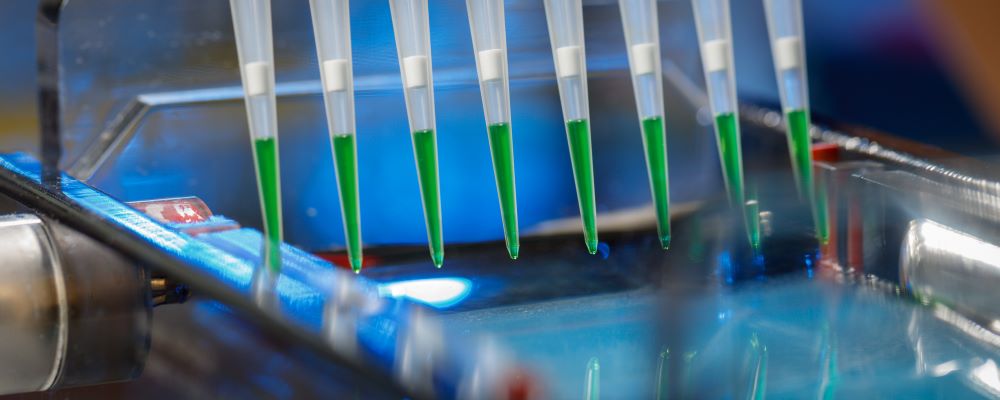
(Image: loading amplified DNA samples to agarose gel with multichannel pipette.)
Agarose gels are key components in many medical applications, from drug delivery systems and advanced wound dressings, to genetic research, forensic science, and the repair and restoration of damaged tissue and organs.
They are also used as dermo-fillers in reconstructive and cosmetic surgery. They are the primary ingredient of the agar in the Petri dishes used in classic germ swab tests in school science lessons, as well as a plant-based alternative to gelatin found in many foods.
It was already well known that the properties of agarose hydrogels change as they dry out, but, until now, the specific nature of those changes has been poorly understood.
This new research by Dr Khoshnaw and his colleagues investigated exactly how the mechanical and structural properties of agarose-based hydrogels evolve during dehydration.
Their study has revealed two distinct mechanical processes. Network buckling which takes place during the first 24 hours of dehydration, where the internal network of polymer strands in the gel begins to shrink and buckle, temporarily making it less stiff. This is followed by pore buckling between 24 and 72 hours when, as more water is lost, the tiny pores within the structure collapse and pack together thereby making the gel much stiffer and stronger.
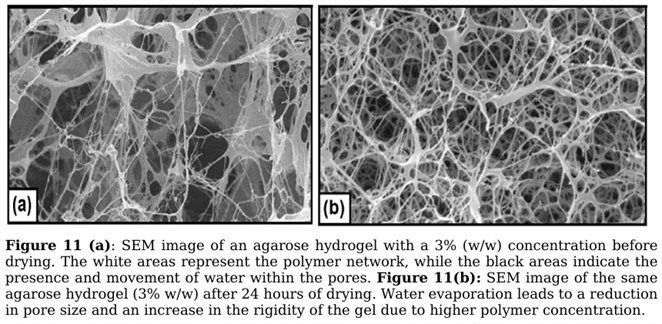
The research has also demonstrated that the concentration of agarose significantly influences drying dynamics and mechanical stability.
As Dr Khoshnaw explained: “Understanding and improving the mechanical behaviour of agarose gel products is important to ensure their reliability and performance in biomedical and research applications.
“Mechanically, agarose gels exhibit elastic and viscoelastic behaviour, meaning they can deform under stress and partially recover their shape. These characteristics make agarose hydrogels valuable in applications such as biomaterials, tissue engineering, drug delivery systems, and cell culture scaffolds.
“These findings are relevant for biomedical, soft-material, and tissue-engineering applications, where controlling drying kinetics is critical to mechanical performance.”
The full article can be seen here: Unveiling the poroelastic evolution of agar hydrogels through the drying process | Scientific Reports
Posted on Wednesday 11 March 2026