Picture the scene - a windowless room, a bright light shining in the eyes of a suspect, a sinister figure extracting information with threats or violence; it’s a trope so familiar from the big and the small screens that it's easy to suppose such tactics must work in real life too.
But the problem, say researchers, is that in reality they do not work, at all.
Information gained through coercive interviewing practices, ranging from psychological pressure and misleading evidence claims to physical abuse, can be unreliable, inaccurate and in some cases contribute to miscarriages of justice.
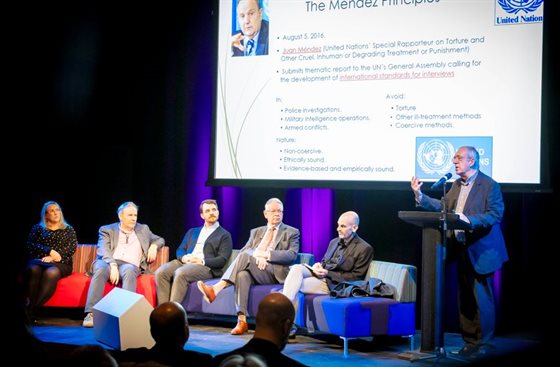
This week a new €10.4m research project called JUSTICE was launched to uncover the reasons behind coercive interviewing, where it exists and push a shift towards more ethical, evidence-based and effective interviews.
“We know it doesn’t work,” said Professor Dave Walsh, Professor in Criminal Investigation at De Montfort University Leicester (DMU). “What we don’t know is why it is still being done when all the evidence suggests that it does not get to the truth.”
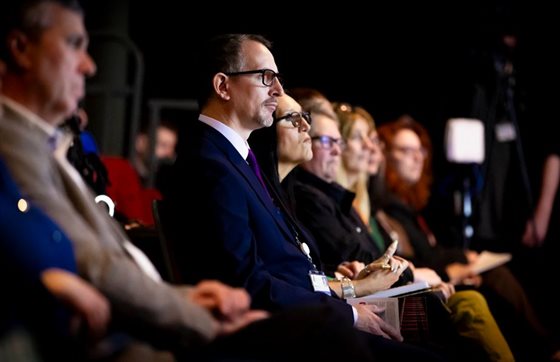
The JUSTICE launch brought together the United Nations, criminal justice practitioners, researchers and students to hear how the six-year programme will run and its ambitions to change the face of interviewing around the world.
Guests heard from Aimee Comrie, Chief of the Crime Prevention and Criminal Justice Section at the United Nations Office on Drugs and Crime, and forensic accountant Ron Warmington – whose work investigating complaints linked to the Post Office Horizon system helped expose one of the UK's most significant miscarriages of justice.
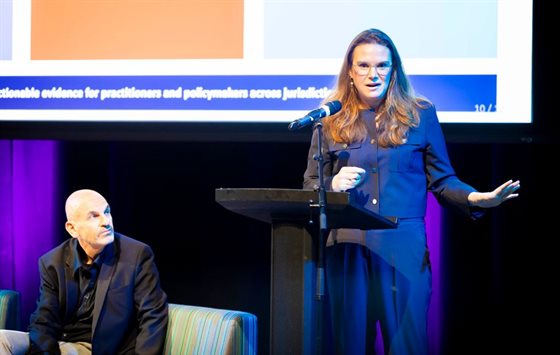
The launch was compered by former BBC crime correspondent Danny Shaw and introduced the JUSTICE team – Professor Walsh, Professor Yvonne Daly (Dublin City University), Professor Shane O’Mara (Trinity College Dublin) and Dr Bennett Kleinberg (Tilburg University, The Netherlands).
Their six-year study will initially involve 100 countries, assessing them against the Mendez Principles on effective interviewing, international guidance designed to support ethical interviewing and reduce coercive investigative practices. The team will train an artificial intelligence model to design strategies that show the best interview techniques as a tool to share.
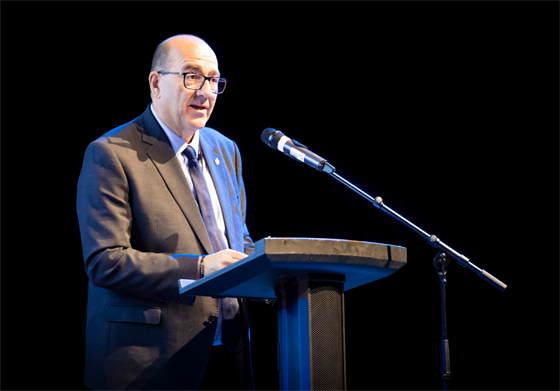
Professor Shane O’Mara, Professor of Experimental Brain Research at Trinity College Dublin, will examine how systems and organisational decision-making can enable or prevent coercive practices.
He said: “People who engage in coercion are not lone actors – they are part of a system. A decision is taken before someone walks into a room with someone who is being investigated and that’s what we really want to understand.
“I hope is that we will create happier and better societies for us all.”
Mr Warmington said: “I think it’s essential that we raise the quality of prosecutions to reduce the likelihood that innocent people are convicted, sometimes jailed.
“The root cause of almost all of this is horribly poor investigations. You can’t base a safe prosecution on an unsafe investigation.”
Professor Mike Kagioglou, Deputy Vice-Chancellor Planning, Research and Innovation at DMU, said: “We were proud to bring together international experts, researchers, practitioners and students to launch this important programme and explore one of the most significant challenges facing justice systems.
“Research has the greatest impact when it connects knowledge with practice, and it was fantastic to see those conversations happening here at DMU.”
Posted on Thursday 21 May 2026