Leading tech influencer Safwan AhmedMia shares about how his time at DMU set him up for his career in content creation, and the secret to his success in the world of social media.
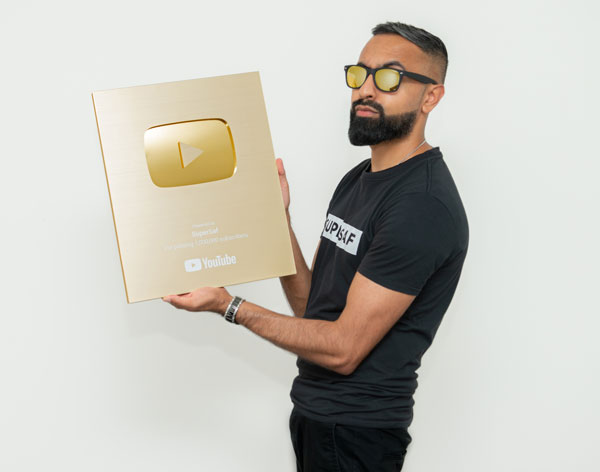
Safwan AhmedMia (SuperSaf) is one of the UK's top tech influencers. With his trademark Wayfarer sunglasses, he’s forged a reputation for accessible smartphone reviews and tech comparisons which have grown him an audience of over five million followers across multiple platforms.
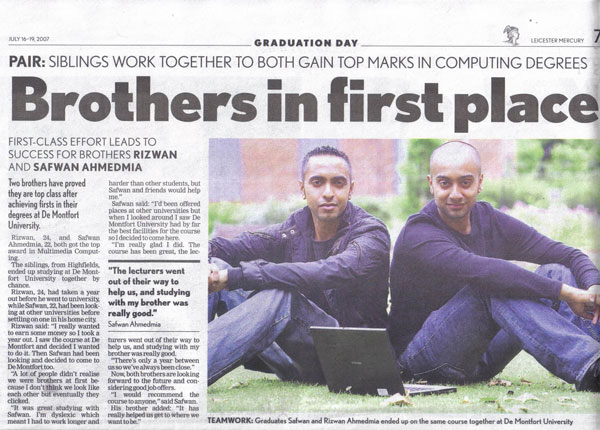
Saf graduated from DMU in 2007 with a first-class degree in Multimedia Computing. He worked for the university in marketing for nearly ten years before moving into full-time content creation, where his videos have had over a billion views. He recently won ‘Online Personality of the Year’ at the 2026 British Muslim Awards.
So, Saf, tell us a bit about your background and how you ended up at DMU.
Studying at De Montfort University was a no-brainer - I’m a local Leicester lad and the youngest of four brothers, and all four of us studied at DMU. My two older brothers had already been and had had a good experience, and then myself and my brother Riz, we actually chose to study on the same course together, Multimedia Computing.
I’ve always been interested in multimedia. This is the time before YouTube and social media - I was just super interested in cameras. My brothers and I used to take my dad's camcorder on the weekends and make little videos, so I just became fascinated with video and photography and web design.
So, Multimedia Computing was the perfect choice. And it was offered locally, so I didn't have to go anywhere else, because the university was offering some of the best facilities.
Any standout memories from your time at DMU?
Yes, lots! I was fortunate enough to study with my brother, but also lots of close friends, friends who I grew up with and who I'm still in touch with. So, it was really nice to have that support network.
Some of my fondest memories are of using the green screen studio, which was amazing because not many other universities had facilities like that. I actually have a green screen in my own studio upstairs, so I still use it to this day, many years on. So, it was great to be able to utilise those facilities and get some experience of how it would be in the industry.
I also did a sandwich course, which gave me an opportunity to get some proper industry experience between my studying, and a preview of the real world of work.
Tell us a bit about your career path after university
I’d been offered a graduate job where I had my industrial placement, and that was my plan. But I’d also had a two-month placement in marketing at DMU, where we did some 3D animation and web design, and they really liked my work. A full-time position came up and I thought it would be a good opportunity to work for the university that I studied at. I ended up staying there for almost ten years, so it was a really good experience.
I was working in social media, creating interactive content. Initially it was a lot of multimedia and web design, and then it transitioned into video and photography.
Some of what we were doing at the time was very different, not many universities were doing it. For instance, I think we were the first uni to incorporate drone footage into our videos.
I was given the creative freedom to try out different ideas. Sometimes they wouldn't work, sometimes they would be a little too ‘out there’. But sometimes they would do well on social media because students could really relate. I guess having been a student myself at DMU gave me a unique angle because I could see what would work with students.
And your transition to full-time content creation?
On the side, because I was so interested in this technology, I started a YouTube channel. As I was working at the university, in the evenings and weekends I was building my channels on social media, and eventually I came to a point where balancing the two was quite difficult.
There’s a typical story that a lot of content creators will give where they hated their job, and then they had this opportunity of becoming a content creator and then they quit. But for me, it was very different because I really enjoyed my job and the people I was working with.
Some people asked me why I hadn’t left, because by that time I had almost half a million followers, but I wasn't full-time because I was having a really good time working at DMU! So, it was quite a difficult decision to make, but it came to a point with all the travel, I just couldn't balance the two and I had to make that choice.
What have been the most rewarding things about your career as a content creator?
I’ve been very fortunate to have lots of great moments, being around other content creators who are like-minded and easy to get on with.
One highlight was attending an Apple event and being able to interview Apple CEO, Tim Cook, which was amazing. Also interviewing footballer Paul Pogba, and the UFC fighter Khabib Nurmagomedov - just having opportunities to meet so many amazing and influential people as part of what I do.
Being able to travel too - I can't play that down - going to so many different places and seeing so many different things. I love to travel, and as part of what I do now as a tech content creator, I get to travel everywhere.
What’s your philosophy for your content?
My main aim throughout has been to make content accessible. When I'm making content, it should be something that anybody can watch. If my parents are watching it, or my nieces and nephews, it should be fine for them. So, I never swear in any of my content, I don’t make it controversial, and I try to keep it relatable and easy to watch.
I’ve always tried my best to set a good example, to be a positive role model. It's not necessary to use profanity or controversy to gain a following, you can do that by just trying to be nice. And that's my aim - hopefully it's working!
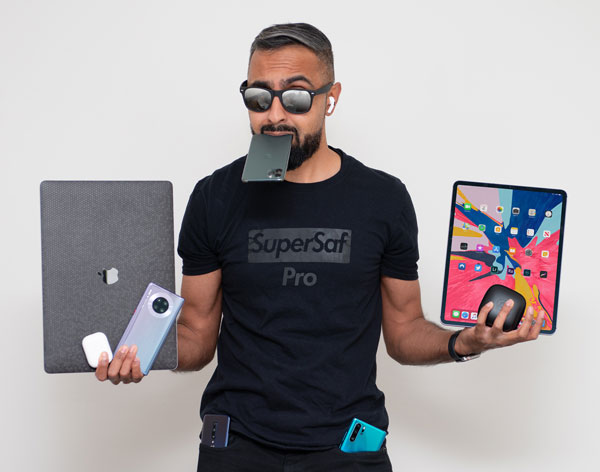
From the content side of things, I always try to make things entertaining, to try to put my personality into it. And, although I cover technology, I know that most people watching might not be too technical. So, if somebody's just watching a smartphone video, for example, they don’t need too much technical info, so I just show them the results. I think people appreciate that.
How has your study at DMU helped you in your career?
One of the key things the lecturers who were experts in their fields. I remember doing some research for 3D imaging and I came across a book that one of my lecturers had published. I was like, this is really cool because you're actually learning from the industry experts.
I got along really well with the lecturers as well, we had a good relationship and that really helped. So, having the experts at hand and I think just generally having the confidence that I built over my time at DMU, being able to test out things, getting industry experience.
In my field, getting hands on with software really sets you apart too. For example, I was using 3D Studio Max on my course, which was used for a lot of feature films and animated films, and that really set me up for the industry.
What would your advice be to someone who wants to be an influencer?
Actually, I usually don't use the word influencer. I say content creator because the ‘influencer’ word has a lot of negative connotations.
But, to anybody wanting to pursue a career in social media and content creation, my advice would be to find something you love. If you're just doing something to become popular or getting lots of followers, it's not necessarily the best aim to have. If you enjoy doing what you do, it's best to try to pursue that - something that you're really interested in. For me, that was tech and multimedia.
And whatever the route that is, if you find a suitable course that you think is going to help you, then that's great. To get hands on experience is really important too. We are in a unique place now where everything's very accessible - you don't necessarily need to spend lots of money on equipment, you can just start off with your smartphone.
Any advice for students who are wondering about whether to go to university?
I’d say have a look and do your research. I went the university route and had a really good experience, and I learned a lot in my course which I followed on with in my career.
Everybody's career path is different – if you’re going to make that commitment to a course at uni, then research, go to the open days and try to gain that hands-on look.
University is not only about the courses, it's also about the experience going there. You yourself are accountable - that's one of the key things that I found out. University helps you become an adult because you’re the only one who’s affected by what you do or don’t do. If you’re in a work environment and you don't do well, then you're going to get fired, but at university, it's all down to you. So, that personal accountability is really important and it really does help.
Follow SuperSaf on YouTube, TikTok, Instagram or Facebook, or check out his website supersaf.com.
Posted on Friday 22 May 2026