From 7 July - 20 July the Chinese Bridge Summer Camp, organised by the University of Science and Technology Beijing (USTB) in partnership with the USTB-De Montfort University (DMU) Confucius Institute, was successfully held. More than ten students and faculty members from DMU gathered at USTB for a two-week cultural immersion program, during which they experienced the charm of the Chinese language and gained an in-depth understanding of a real, multi-dimensional, and dynamic contemporary China.
The summer camp officially opened at USTB on 7 July. Following a concise yet warm opening ceremony, the participants toured the campus and engaged in friendly exchanges with Chinese volunteer teachers, quickly bridging cultural distances. Over the following week, the campers attended systematic Chinese language courses each morning, while afternoons were devoted to a rich rotation of activities, including lectures on traditional Chinese culture, cultural exchange salons with Chinese students, calligraphy workshops, and experiential classes in Tai Chi, traditional Chinese music, and Chinese painting. Through this dual immersion in language and artistry, the participants truly felt the profound depth of Chinese culture.
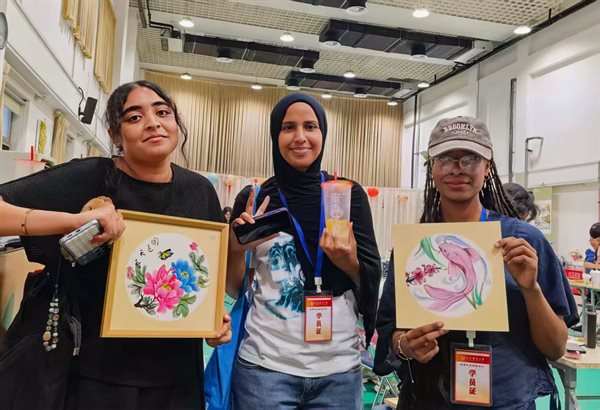
In terms of curriculum design, the summer camp thoughtfully arranged a diverse range of content, including calligraphy, Tai Chi, traditional music, Chinese painting, and special lectures on cultural heritage. Each morning, students systematically studied the Chinese language, while afternoons were filled with cultural lectures, cross-cultural youth exchange salons, and hands-on traditional art practices. Between the strokes of the brush and the balance of movement and stillness, they came to appreciate the inner essence of Chinese culture and the elegance of Eastern aesthetics. These rich interactive sessions not only deepened the campers' understanding of Chinese traditions but also strengthened emotional resonance and intellectual exchange between Chinese and international participants.
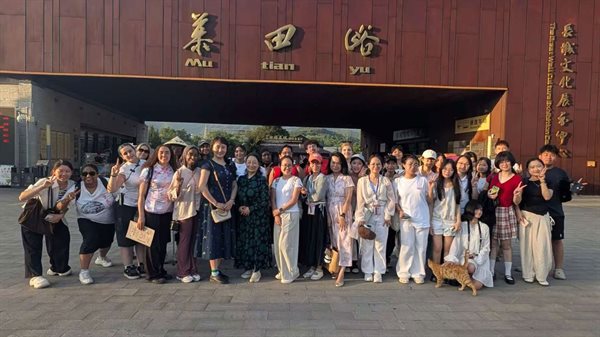
To broaden the students’ cultural horizons, the camp also designed several thematic field trips with distinctive cultural significance. During the Beijing leg, participants visited the Forbidden City, the Temple of Heaven, and the National Museum of China, where they stood amid majestic palaces and time-honored artifacts, experiencing the grandeur and historical depth of the ancient capital. After transferring to Chengdu, the campers explored the Panda Base, the Sanxingdui archaeological site, Kuanzhai Alley, Dujiangyan, and Mount Qingcheng. Amid playful giant pandas, mysterious ancient Shu relics, and the wisdom of mountain-and-water landscapes, they savored the unique charm of the Land of Abundance. This two-city narrative allowed the participants to discover China step by step and enrich their understanding through firsthand experience.
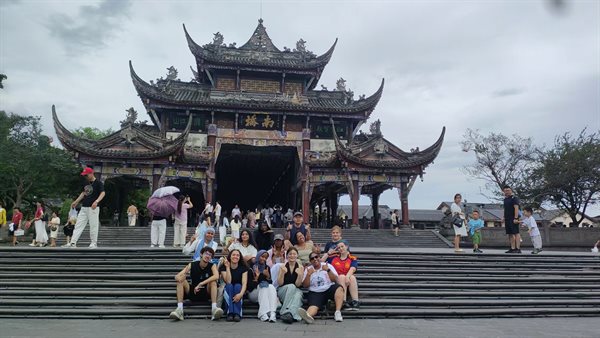
Spanning two weeks and covering both Beijing and Chengdu, the Chinese Bridge Summer Camp integrated Chinese language courses, cultural experiences, city explorations, and academic exchanges. Through the deep fusion of language learning and real-world engagement, this summer cultural journey opened a bright window for young British participants to see, understand, and fall in love with China.
Posted on Monday 10 August 2026