The renowned law school at De Montfort University Leicester (DMU) is set to celebrate its fiftieth anniversary with a move to the city’s historic courtrooms, where justice was administered—and legal history made - for more than 700 years.
Leicester De Montfort Law School, which began life in 1976, is relocating over the summer to the former criminal courts at Leicester Castle’s Great Hall, which became the city’s Assize Court in 1273—during the reign of Edward I.
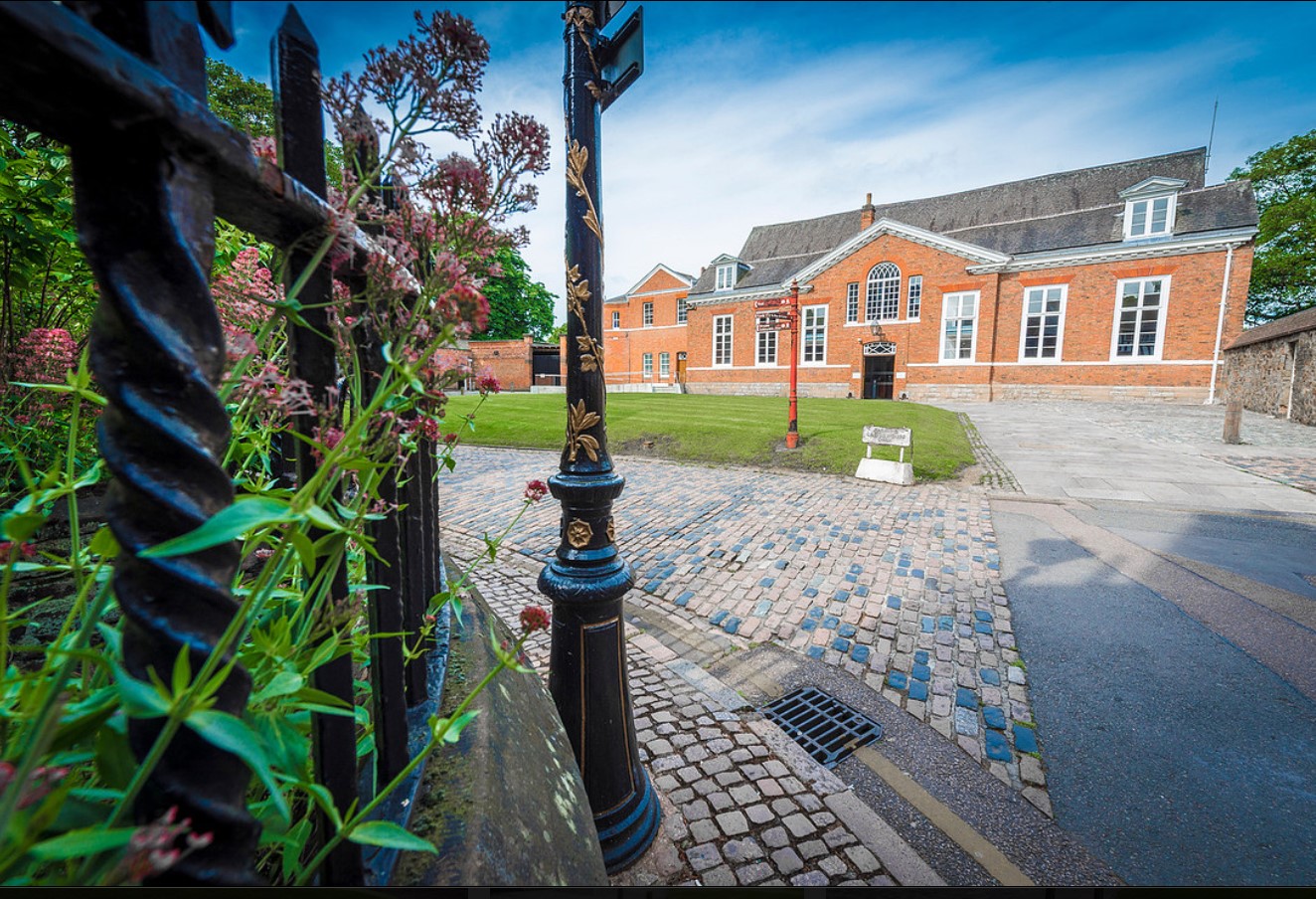
DMU law students now hone their courtroom skills in mock trials and tribunals in the the Grade I-listed building which has two seprate courts with cells beneath which, until 1992, held prisoners facing trial. In a recent international advocacy project, the courts were used when students from DMU’s Leicester and Dubai campuses joined counterparts at an American university in live online simulated legal hearings.
The school’s move into the castle follows major international recognition for the quality of its legal research. The Times Higher Education World University subject rankings 2026 placed DMU Law second in the UK and 13th in the world for the quality of its research.
Students gave the Law School a resounding thumbs-up in the recent National Student Survey for 2026. The independent survey placed Leicester De Montfort Law School in the top fifth of the UK’s 115 law schools in all seven survey categories, from quality of teaching, to academic support, and learning resources.
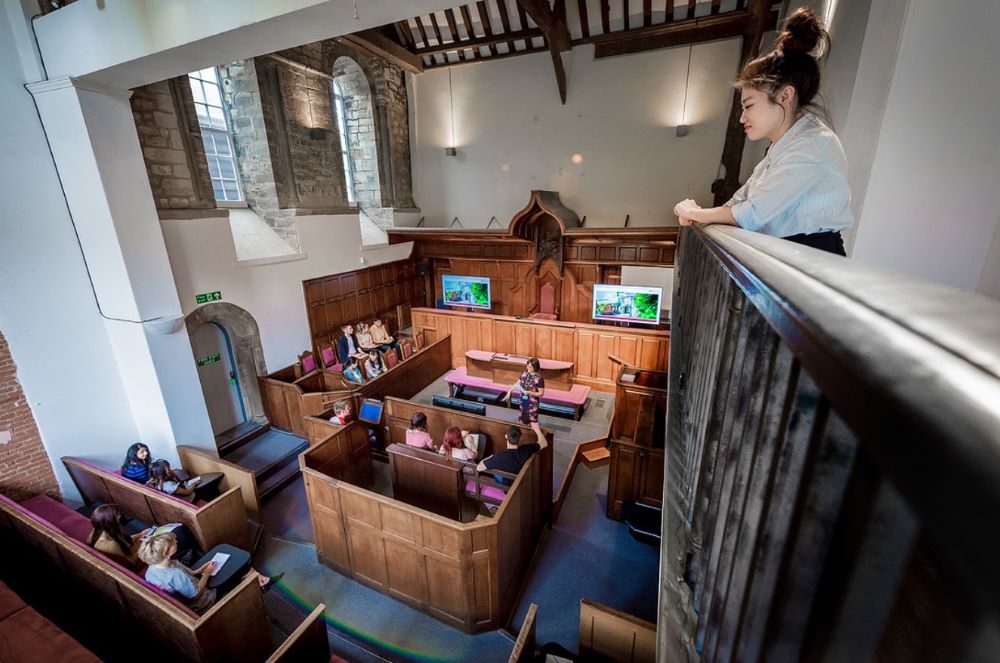
During its time as the criminal court for the city and wider area, Leicester Castle’s Great Hall saw hundreds of years of legal history, from the acquittal in 1920 of Ronald Light in the notorious Green Bicycle murder trial - which remains one of Britain’s best-known unsolved murders - to the 1856 conviction of William 'Peppermint Billy' Brown for a brutal double murder near Melton Mowbray; he was hanged in front of a crowd of 25,000 in what was the last public execution in Leicester.
Further back still, the court was the venue for the infamous Husbands Bosworth witch trials of 1616, where nine women were convicted, under King James I’s Witchcraft Act of 1604, for bewitching the 13-year-old grandson of the Lord of the Manor. The women were hanged together on 18 July at the gallows close to what is now Castle View. Their teenage accuser later recanmted, admitting that he had made the whole thing up.
Such legal history adds to the sense that the courts are a proper home for DMU’s prestigious Law School, which trains hundreds of prospective lawyers who go on to work as solicitors and barristers in the criminal law, as well as in civil and corporate fields of the legal system.
Alan East, Head of Leicester De Montfort Law School, said: “It is entirely fitting that a law school with such a strong reputation for teaching, research and professional practice should make its home in a building where justice was administered for more than 700 years.
“Leicester Castle’s courtrooms have witnessed enormous changes in the law. They will now become the academic and administrative heart of our Law School, connecting that extraordinary legal heritage with the research and scholarship shaping the law today.
“I am sure our students and staff will take great pride in the fact that their Law School is based in one of Britain’s most important historic legal buildings.”
Leicester Castle’s Great Hall: key facts
- DMU brought the Great Hall back into regular use in 2016, when it opened as Leicester Castle Business School
- The university worked closely with Historic England and conservation specialists on the £4.2 million restoration
- Archaeological and conservation work revealed previously concealed features, including human remains, medieval fire pits, pottery fragments and a Norman arch
- A Norman motte-and-bailey castle was established on the site in about 1068.
- The surviving Great Hall was constructed in about 1150 and retains original 12th-century timber posts.
- It is the oldest surviving aisled and bay-divided timber hall in Britain.
- The castle became a favourite residence of John of Gaunt, first Duke of Lancaster and fourth son of Edward III.
- Parliament met in the hall during the Middle Ages, including the turbulent 'Parliament of Bats' in 1426.
- Richard III stayed at Leicester Castle twice in 1483 and referred to it in correspondence as 'my castle at Leicester'.
Posted on Friday 7 August 2026