Manufacturers across the East Midlands can now benchmark their environmental performance against businesses across the region using a new interactive tool developed by researchers at De Montfort University Leicester (DMU).
Launched at a regional green logistics event bringing together manufacturers, policymakers and business support organisations, the online dashboard enables businesses to compare their performance across key areas including transport, packaging, purchasing, inventory management and reverse logistics.
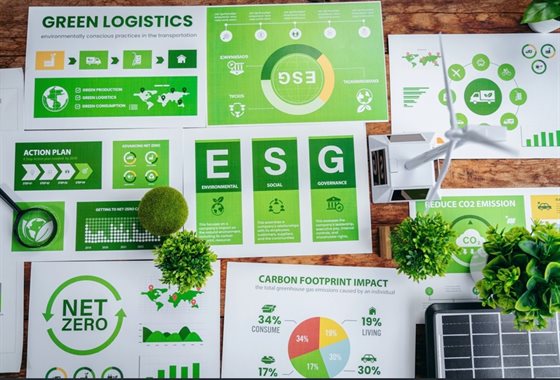
The dashboard accompanies one of the first regional assessments of green logistics across East Midlands manufacturing. Researchers surveyed 103 manufacturers of all sizes and found businesses are making encouraging progress towards more sustainable supply chains, while identifying clear opportunities to improve competitiveness and prepare for future environmental regulation.
Professor Rachel Granger, Director of DMU's Institute for Responsible Business and Social Justice, said: "The East Midlands is one of the UK's largest logistics hubs, so how goods move through our region matters enormously for businesses, communities and the environment. Green logistics is no longer simply about sustainability it is becoming a catalyst for innovation, competitiveness and long-term business growth."
Packaging and environmental management emerged as the region's strongest areas, while reverse logistics – recovering products and materials for reuse, recycling and refurbishment – was identified as the greatest opportunity for improvement.
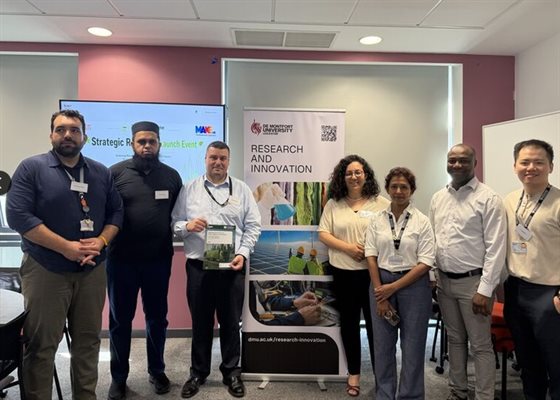
Dr Ayham Jaaron, Associate Professor in Sustainable Management at DMU, led the work. He said: "This research represents many months of work with more than 100 manufacturers, ranging from small businesses through to large organisations. What we've found is that the biggest opportunity lies in reverse logistics, while companies that invest in skills and training consistently demonstrate stronger green logistics practices."
The research also showed that medium-sized businesses significantly outperformed smaller firms, and that targeted support for SMEs could deliver the greatest regional impact. Companies with formal environmental policies also demonstrated consistently stronger green logistics performance.
Among those attending the launch was Gemma Brocklehurst of Bakewell-based CODEL International, which designs and manufactures emissions monitoring equipment used around the world. She said: "It's been really useful. As a manufacturer, it's helped us think about where we fit into the environmental picture. As a relatively small business, understanding where we can access funding and what support is available to help us improve is incredibly valuable."
Nadia Ansari, from East Midlands Freeport, said: "The report reflects what we are seeing across the region. Logistics plays a vital role in attracting investment, and there is support available for SMEs looking to improve through funding, innovation and collaboration."
The research team hopes the dashboard will become a practical resource for businesses, allowing manufacturers to benchmark themselves against their sector, identify priorities for improvement and make better-informed investment decisions.
Keynote speaker Dr Mojtaba Sajadi, of Aston University, explored how green logistics can provide manufacturers with a competitive advantage by improving efficiency, reducing costs and strengthening long-term resilience.
Plans are underway now for the next phase of the project, bringing together regional partners to help manufacturers accelerate the transition to greener logistics.
The work was funded by HEIF, the Higher Education Innovation Fund, which supports work to better connect academic research with real world applications in industry.
Posted on Wednesday 8 July 2026