As healthcare becomes increasingly connected, Dr Ismini Vasileiou, Director of the East Midlands Cyber Security Cluster and Associate Professor in Information Systems at De Montfort University, looks at why protecting patient information is vital to delivering safe, reliable and resilient healthcare services.
In my work with organisations on cyber resilience, I encourage leaders to consider how protecting their systems supports the people who depend on their services. In healthcare, that connection is particularly important.
Protecting digital systems means protecting the people who depend on them. This is especially true in healthcare, where cyber resilience directly affects the delivery of essential services.
When we talk about cyber security in healthcare, the conversation often begins with computers and passwords. It should also begin with people and the care they depend on.
Healthcare teams need information they can trust and systems they can access. If records are unavailable, altered or accessed without authorisation, the consequences can reach beyond the IT department into appointments, clinical decisions and everyday service delivery.
Strong cyber security helps healthcare organisations deliver safe, reliable care and maintain the trust of those who depend on them.
England’s planned Single Patient Record aims to connect information across health and care settings, with patient access through the NHS App planned from 2028. This creates opportunities for more coordinated care, alongside important questions about how information is protected.
For healthcare businesses, the starting point is understanding where digital systems support essential services. Which information does your team need to deliver care? Who can access it? What would happen if that access disappeared?
These questions help make cyber security tangible. They connect technical decisions to the experiences of patients, colleagues and the wider organisation.
Protecting healthcare data means paying attention to its confidentiality, accuracy and availability. Keeping information private matters, but so does ensuring it remains reliable and accessible when needed.
Healthcare leaders do not need to master every technical detail to act but they need to understand which services depend on digital systems and where disruption would have the greatest impact.
At DMU, that is where we can start: with your organisation, your concerns and the practical challenges your team faces.
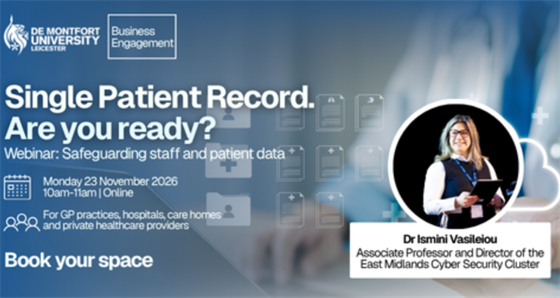
Join our webinar on 23 November to explore healthcare data, cyber security and what a more connected future could mean for your organisation.
Register here
Posted on Friday 16 October 2026