Business, civic, university and community leaders from across Leicester, Leicestershire and Rutland have met to discuss how the region can work more closely together to support economic growth.
The Economic Growth Summit brought together representatives from business, higher education, local government and the third sector to examine priorities for productivity, skills, innovation and investment.
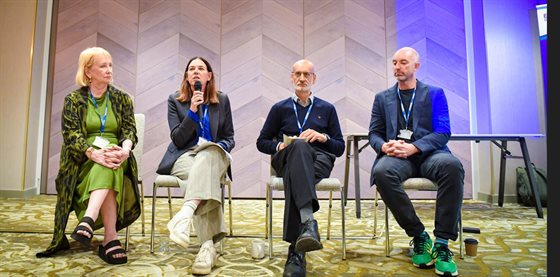
The event, organised by De Montfort University Leicester (DMU) and supported by the Civic Universities Partnership, took place as the Government reviews its decision on local government reorganisation across Leicester, Leicestershire and Rutland. The reorganisation process was paused on 7 September while the review takes place.
It also followed a joint letter from all 10 council leaders across Leicester, Leicestershire and Rutland confirming their preference for a Mayoral Strategic Authority for the area, unlocking millions in Government funding on the scale seen by neighbouring Nottingham and Derby.
Roundtable discussions throughout the day considered the opportunities and barriers affecting economic growth across the region, including skills, innovation, business support, infrastructure, leadership and coordination between organisations.
Their findings were brought into a final panel discussion, where speakers called for clearer regional priorities, stronger links between organisations and improved communication between business, universities, local authorities and other partners.
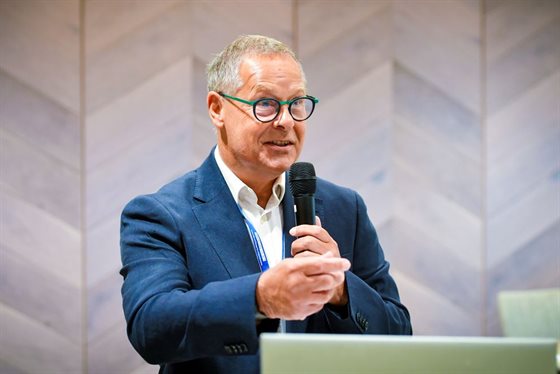
Professor Richard Thomas, Pro-Vice-Chancellor for Research and Innovation at the University of Leicester, said the summit had provided an opportunity to consider how closer partnership working and devolution could support regional growth.
He said there had been a strong focus on “maximising the opportunities that devolution will present” and supporting productivity, growth and skills development.
The summit also heard from Professor Harris Beider, founder of The Forward Institute, and Tom Wolfenden, Chief Executive of Sheffield Technology Parks.
Wolfenden shared experience from Sheffield Spine, an urban innovation district bringing together businesses, institutions and other partners around the city’s existing strengths.
Life sciences was highlighted during the closing session as an area with further potential for investment and growth.
Gosia Khrais, representing Charnwood Campus Science Innovation and Technology Park on the closing panel, said the region should focus more clearly on commercial outcomes and areas where there was already evidence of business and investment potential.
Universities were identified during the discussions as anchor institutions with roles in attracting and developing talent, supporting businesses, connecting research and innovation with local priorities and contributing evidence to economic planning.
Ahead of the summit, a series of roundtable discussions each focusing on a different aspect linked to economic growth were held.
Professor Katie Normington, Vice-Chancellor of De Montfort University, said: “The summit showed the strength of ambition that exists across Leicester, Leicestershire and Rutland, but also the importance of turning that ambition into sustained partnership working.
“Universities have an important role to play in bringing people together, supporting businesses, developing the skills our economy needs and ensuring research and innovation contribute directly to the prosperity of our communities.
“DMU is committed to playing its part in maintaining the momentum created by the summit and working with partners across the region to support inclusive and sustainable growth.”
Posted on Sunday 18 October 2026