Researchers from De Montfort University Leicester (DMU) are helping to shape international discussions on the future of clean energy at COP31, the United Nations’ global climate change conference.
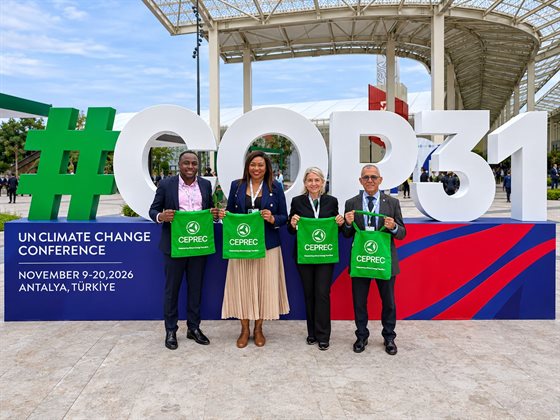
Professor Muyiwa Oyinlola and Dr Abi Okoya are in Antalya, Türkiye, as part of an international delegation from the Circular Economy Powered Renewable Energy Centre (CEPREC), a £3.5 million research partnership led by DMU.
The team is bringing together researchers, policymakers, industry leaders and development partners to explore how African countries can expand access to renewable energy while creating jobs, developing skills and reducing waste.
A central focus is ensuring that renewable energy technologies, including solar panels, batteries and associated equipment, can be maintained, repaired, reused and recycled rather than becoming future environmental problems.
CEPREC is hosting two sessions at the Namibia Pavilion, participating in a third hybrid event and contributing to discussions with international partners throughout the conference, which runs from 9 to 20 November.
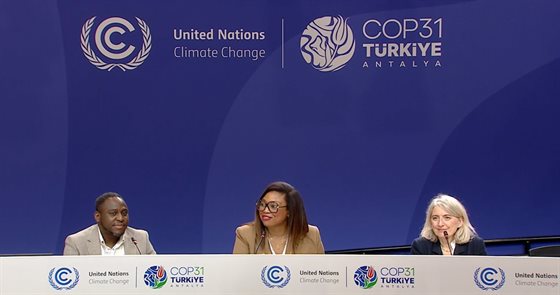
The delegation is also holding a press conference entitled From Deployment to Lifecycle Value: Building Africa’s Circular Energy Transition, highlighting the importance of considering the entire lifespan of renewable energy technologies, from their initial deployment through to repair, reuse and recycling.
The press conference coincides with COP31's Zero Waste Day today (11 November), which places the circular economy and resource efficiency firmly on the global climate agenda. It provides an opportunity for the DMU-led partnership to demonstrate why reducing waste and extending the life of renewable energy technologies must be central to the transition to cleaner energy.
Professor Oyinlola, Director of CEPREC and Professor of Innovation for Sustainable Development at DMU, said: “The global conversation about renewable energy often focuses on how quickly we can deploy new technologies. But we also need to ask what happens afterwards. Who maintains these systems? Who has the skills to repair them? And how do we ensure that today’s clean energy investments do not become tomorrow’s waste problems?
“At CEPREC, we are working with partners across Africa and the UK to address these questions by connecting engineering innovation with local skills, business models and policy.
“COP31 provides an important opportunity to bring this wider perspective into climate discussions and make the case for energy systems that are not only clean, but circular, inclusive and built to last.”
Funded by UK Research and Innovation (UKRI) through the UK Government’s Ayrton Fund, CEPREC brings together universities, governments, businesses and other organisations across Africa and the UK.
Its research includes developing renewable energy microgrids using repurposed electric vehicle components, exploring opportunities to give batteries a second life and supporting the development of local expertise to maintain and manage clean energy systems.
The partnership is initially working across six African countries: Nigeria, South Africa, Kenya, Sierra Leone, Namibia and Rwanda.
At COP31, the delegation is contributing to discussions on building a connected, circular and knowledge-driven energy future for Africa, including the investment, skills, policies and international partnerships needed to turn research into practical solutions.
Dr Abi Okoya, CEPREC's Head of Strategic Partnerships and a DMU Research Fellow, said: “One of the biggest challenges in the energy transition is not simply developing new technologies, but creating the partnerships and conditions needed to make them work in practice.
“Across Africa, there is significant knowledge, innovation and ambition. The opportunity is to connect these strengths with the right investment, institutions, skills and policy support.
“Our engagements at COP31 are about bringing researchers, policymakers, industry and development partners together, while ensuring that African institutions and communities play a central role in shaping solutions that respond to their own priorities.”
CEPREC's participation follows its contribution to United Nations climate negotiations in Bonn, Germany, earlier this year, where the DMU-led team worked alongside the United Nations Industrial Development Organization (UNIDO) to highlight the importance of circular approaches to renewable energy.
The work reflects DMU's wider commitment to using research and international partnerships to address global challenges and translate academic expertise into practical benefits for communities, businesses and policymakers.
COP31 brings together world leaders, researchers, businesses and civil society representatives to accelerate international action on climate change.
Posted on Wednesday 11 November 2026