Fuelled by his own challenges and the experiences of his neurodivergent best friend, a De Montfort University, Leicester (DMU) graduate has created two digital platforms to help people navigate daily life with confidence and ease.
Karan Kumar created HiKind and KindHours to turn personal insight into tools that make everyday life easier, public spaces more accessible, and self-understanding more achievable.
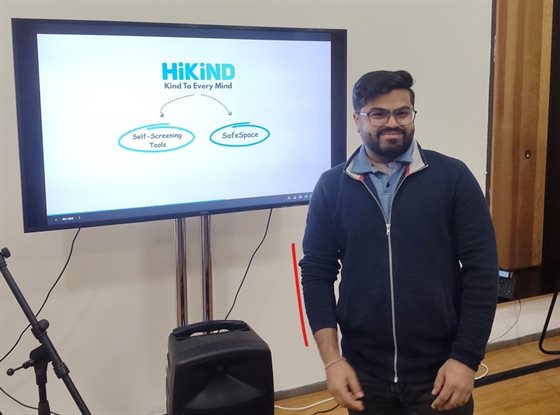
HiKind focuses on wellbeing and self-insight, offering personalised self-assessments, mood tracking, and supportive tools to help people understand their traits and needs without the pressure of clinical diagnosis.
While KindHours helps people plan visits to public spaces such as parks, libraries, and cafes, using real user-reported data on noise, lighting, and crowd levels to reduce anxiety and make outings more manageable.
Both apps were developed with support from The Crucible, an entrepreneurship programme for DMU graduates and alumni who have an idea, product or service and need support to turn it into a business. Applications to join the programme can be made from final year.
Karan, who studied International Business Management at DMU, said: “The Idea behind HiKind was simple: self-understanding should not take years.
“The platform is inspired by lived experience. Growing up, I always dreamed of becoming a social entrepreneur, but the reality was that I struggled with communication and social interaction.
“From an early age, I was labelled ‘too kind’ or ‘introverted’, and even ‘saying hi’ to new people seemed difficult. For a long time, those labels stuck, and they did more harm than help.”
He added: “Later, I became close friends with someone who is neurodivergent. Through our conversations, I recognised many familiar traits, especially around communication, social energy, and sensitivity to environments.
“The difference was clarity: they had a diagnosis and language to understand themselves, while I didn’t fit diagnostic thresholds and was left without explanations and further support.”
“I began to realise lots of people live with traits that affect how they think, feel, and interact, but not everyone fits neatly into a diagnosis.”
It was this insight which led Karan to develop an idea for an app which became HiKind.
But during the process, Karan noticed a common theme in people’s experiences, many shared stories of environmental and sensory overwhelm. This insight inspired Karan to create a second platform, KindHours.
Karan said: “KindHours is about encouraging spaces to be more predictable and comfortable, through small, thoughtful adjustments and clearly defined hours, like quiet hours, but informed by real experiences.
“Through conversations with international students, another gap became clear. Many avoid certain places because they feel overwhelmed, while others do not know when or where they should go.
“Based on this we upgraded KindHours to become an AI-journey planner that can help with journey planning, offering guidance such as the best times to visit, and user-based insights tailored to individual preferences and sensory limits, helping people explore with confidence.”
Karan is working with the local community in Leicester to support the KindHours platform but hopes to eventually roll this out across the UK.
Karan added: “The ambition is to support communities earlier, looking ahead the focus is working closely with communities, students and public spaces to learn, adapt and grow responsibly.
“The goal isn’t to replace clinical services, but to complement them, creating calmer environments, clearer choices and a culture where well-being is supported through understanding, not labels.”
Percy Emmett, director of The Crucible and subject lead for Entrepreneurship and Specialist Management including apprenticeships and executive education, said: “It’s inspiring to see the impact Karan is making for neurodivergent communities through his apps, HiKind and KindHours. It has been a privilege to support his journey into social entrepreneurship through The Crucible programme.
"The Crucible focuses on developing the individual as well as the business idea, so hearing Karan reflect on the role the programme has played in helping him achieve his goals is exactly why we do what we do. It’s a powerful example of how we continue to support our graduates and alumni beyond their studies.”
Posted on Tuesday 3 February 2026