The “overlooked” danger of extremist views being spread among middle aged social media users has been highlighted in new De Montfort University Leicester (DMU) research.
For the past three years, an international team of academics, led by DMU, has been engaged in the €2.7m Horizon Europe project Social Media Narratives: Addressing Extremism in Middle Age (SMIDGE).
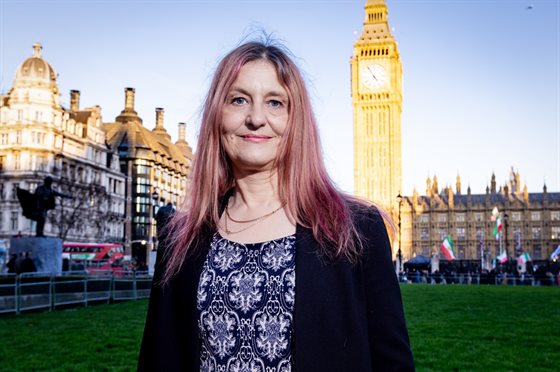
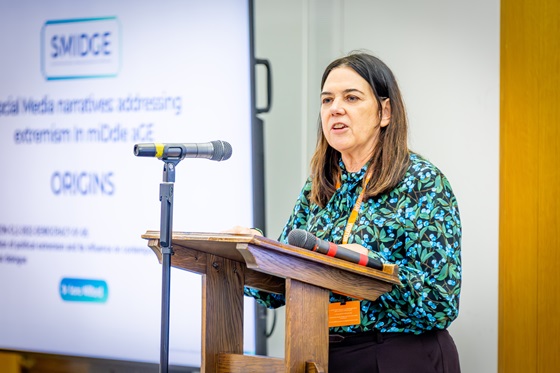
This week, the project’s key findings were presented by lead DMU researchers Dr Sara Wilford and Professor Jason Lee, together with Professor Hamzaoui Raouf, at an event in Parliament.
The project examined how extremist narratives spread through digital media among people aged 45 to 65, identifying middle-aged adults as a significant but underrecognised group affected by online extremist content.
The event was hosted by Vicky Foxcroft, MP for Lewisham and a former DMU graduate. The session included presentations and a workshop discussion with researchers, policymakers, activists and representatives from UK and European organisations.
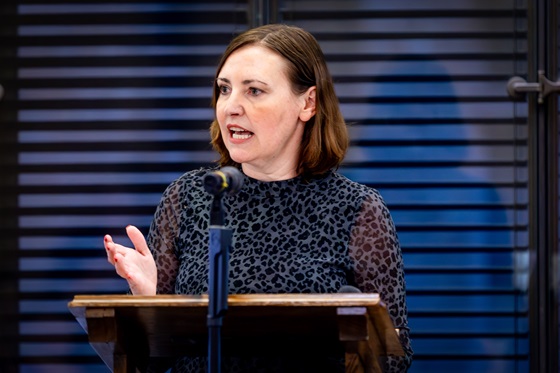
Opening the event, Vicky Foxcroft said: “There is a great deal of debate happening at the moment about how we can safeguard young people online and it's not just in Parliament. I've received hundreds of emails from constituents campaigning for a ban on social media for under 16s. It's also a frequent topic of discussion on my visits to local schools.
“However, over the years, we've also seen a rapid rise in the amount of disinformation being circulated online. And I'm sure all have anecdotal evidence and experience of this across our own social media accounts.
“As voters, parents, employers, and community leaders, middle aged adults have the power to be very influential in our society. And as this research shows, they are also highly susceptible to being influenced by online misinformation. It's extremely important that this is being looked into.”
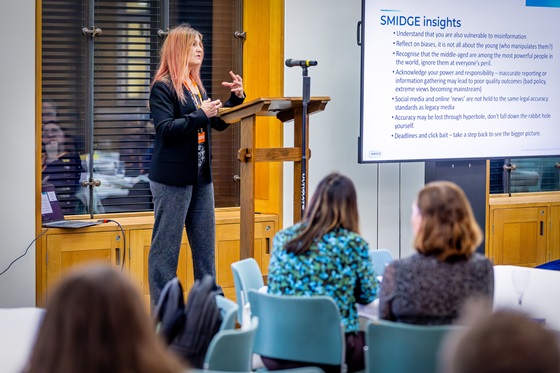
The SMIDGE project combined quantitative and qualitative methods, including a survey of more than 600 participants aged 45–65 across seven European countries, social network analysis and sentiment analysis of online content. Researchers examined comment sections on mainstream media sites, encrypted messaging channels and wider social media activity.
Core findings indicate that middle-aged adults are frequently exposed to online narratives that exploit social, economic and political anxieties. The research identified strong emotional drivers shaping engagement with such content, including feelings of grievance, fear and distrust.
Network analysis also mapped how extremist and harmful content is amplified through various online spaces. These included encrypted group chats, peer-to-peer networks, automated accounts (bots), live-streaming and emerging deepfake technologies. Focus groups conducted with professionals in a range of sectors suggested that current reporting and intervention mechanisms do not adequately address extremist content engagement among middle-aged populations.
In addition to research outputs, the SMIDGE project has produced a range of practical resources. These include counter-narrative content addressing key themes such as immigration and public health, a massive open online course (MOOC) designed for journalists and policymakers to build media literacy skills, a webinar series on democratic resilience and policy briefs outlining recommendations for digital safety frameworks.
Professor Katie Normington, Vice-Chancellor at DMU said the project exemplified the role of modern civic universities.
She said: “At DMU, research of this kind – rigorous, interdisciplinary, and above all impact-driven – is a core strategic principle.
“Institutions like DMU, rooted in their communities, are often closest to the lived realities these issues affect. We see first-hand the social and economic anxieties that can be exploited online, and we are well placed to translate research into practical interventions that strengthen democratic resilience.”
Posted on Friday 27 February 2026