Leicestershire's Bradgate Park is being used as a "living lab" by researchers exploring the relationship between nature and wellbeing.
The study will focus on residents of Beaumont Leys, the closest urban community to the national nature reserve, to better understand how people experience green spaces, what influences whether they visit and whether proximity alone is enough to make nature part of everyday life.
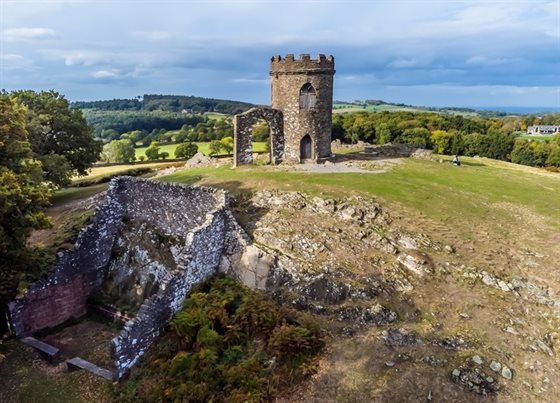
While the mental and physical health benefits of spending time in nature are well established, researchers say far less is known about why people choose to visit nearby green spaces, what barriers they face and how those experiences change throughout the year. Beaumont Leys was selected because, despite its close proximity to Bradgate Park, health outcomes are poorer than average, creating an opportunity to explore how access to nature fits into wider wellbeing.
Researchers from the University of Leicester, De Montfort University Leicester (DMU), Loughborough University and Charnwood Forest Geopark have come together through Collaboratory, a programme that puts communities at the heart of research, to develop the PhD project, which will be undertaken by researcher Raheema Caratella.
Using GPS-tracked walking interviews alongside wearable sensors that monitor physiological responses, such as heart rate, the research team will combine scientific data with participants' own reflections to build a richer understanding of how people experience Bradgate Park and how those experiences change across the seasons.
Bradgate Park is more than one of Leicestershire's best-loved beauty spots. As part of the Charnwood Forest UNESCO Global Geopark, it is home to internationally significant geology, ancient landscapes and wildlife, making it an ideal place to explore how people connect with nature.
Residents will help shape the project, from developing research questions to interpreting the findings, ensuring future recommendations for improving access to and experiences of Bradgate Park are informed by the people who know the area best.
Dr Mark Charlton, Associate Professor at De Montfort University Leicester (DMU) and co-supervisor of the project, said: "Bradgate Park is one of Leicestershire's greatest natural assets, but living nearby doesn't automatically mean people experience or benefit from it in the same way. This research is about listening to local communities and understanding how everyday experiences, practical barriers and people's sense of belonging shape their relationship with nature. That evidence can help inform future decisions about how we design, manage and improve access to our green spaces."
Raheema spent 20 years in community work, including working with young people in Beaumont Leys, before she spotted this opportunity.
She said: "I did not necessarily set out to do a PhD. I started in community work and really enjoyed working with people.
"Then I saw the opportunity while I was mundanely scrolling. It brought together two things I was already passionate about: the outdoors and working with communities. It also connected with community wellbeing, social justice and making nature more accessible. It felt like the right project for me."
“For me, this is about making a difference to residents living in Beaumont Leys, but also helping to put Bradgate Park on the map.
“It is not just another green space. It is part of a geopark, with deer, remarkable geology and the fossil heritage of the wider Charnwood Forest. These are things you do not find in every green space, and I want more people to understand and experience what is there.”
The findings could help shape future decisions around accessibility, transport and community-led activities, while providing new evidence about how people connect with one of Leicestershire's most important natural landscapes.
Posted on Monday 10 August 2026