A world-renowned expert on the modern history of the Balkans will be working with the UK’s Foreign Office after securing a coveted Innovation Fellowship from the British Academy.
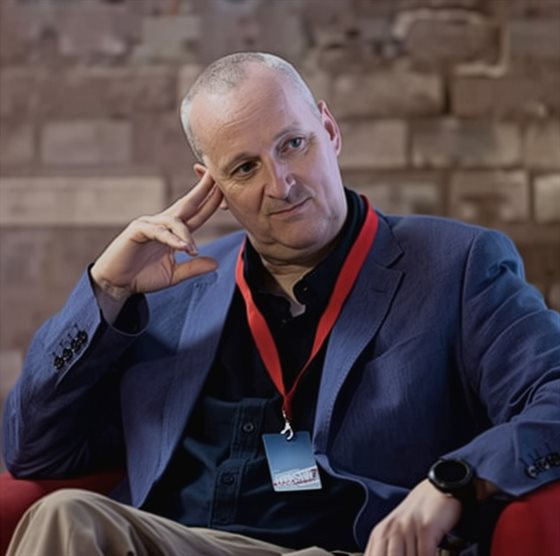
Professor Kenneth Morrison, who is the Director of the Institute of Global Challenges and Cultures at De Montfort University (DMU) Leicester, has been awarded funding of up to £120,000 to work alongside a team of research analysts at the Foreign, Commonwealth & Development Office (FCDO) over the course of a year.
The British Academy developed the Innovation Fellowship to enable researchers in the humanities and social sciences to partner with institutions in both the public and private-sector and tackle global challenges.
Professor Morrison’s fellowship, funded by the Department for Science, Innovation and Technology (DSIT), will see him working with policymakers in the region to develop strategies to help stabilise democratic processes in the Western Balkans and deliver research on the latest political and economic trends in the region.
Professor Morrison said: “It’s a welcome demonstration of the commitment of policy makers to engage with academic expertise.
“Things are always evolving and changing in the region. European security is in a dangerous place and there are geopolitical fault lines in the Balkans that could be exploited.
“Clearly academics have a role to play and this fellowship represents investment in research and expertise.”
Geopolitical tensions continue to cast a shadow over the Western Balkan states, with Russian and Chinese influence growing in the region, particularly following the withdrawal of US-led funding following President Donald Trump’s re-election.
Professor Morrison has long been considered one of the UK’s leading academics in the region, having authored seven books on the modern history and politics of the Western Balkans and has previously worked as a Specialist Adviser on the Western Balkans to the House of Lords International Relations Committee.
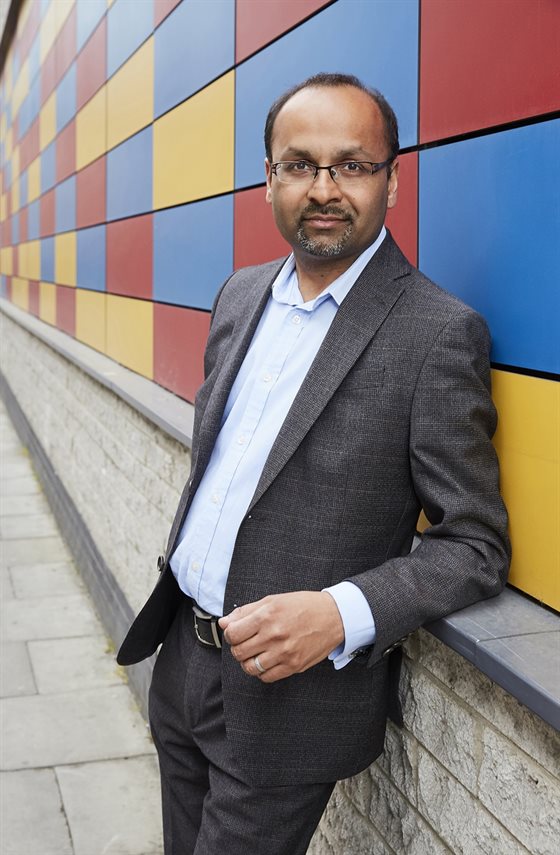
His Fellowship comes as Hetan Shah, the chief executive of the British Academy, visited DMU to speak about the importance of humanities research and how it can play a vital role in helping shape national policies.
In September, the British Academy warned that large areas of the UK risked becoming “cold spots” for the humanities, social sciences and arts degrees because of the financial hardships facing many institutions.
During his lecture at DMU, Mr Shah said that topics like history and languages played a crucial role in understanding geopolitics.
Mr Shah said: “Humanities actually matter and provide all sorts of insight in spaces that policymakers don’t always think about.
“There was a quote from diplomat Ian Proud saying, ‘More than ever we need British diplomats, spies and soldiers to speak the language of our adversaries.
“Humanities can play a central role in understanding geopolitics; history and languages are critical. The American author Robert Kaplan has made the case that literature and Greek tragedy can provide deep insight into international politics.
“These are illustrations of how humanities and social sciences help with some of the key questions policymakers are grappling with. Most policy questions have a human dimension that needs consideration of incentives, trade-offs, structures and culture.
Posted on Tuesday 9 December 2025