Ten researchers from De Montfort University Leicester (DMU) have been recognised among the world's most highly cited academics, highlighting the university's research strengths across disciplines including artificial intelligence, energy, healthcare, history and literature.
The academics feature in the latest Stanford–Elsevier database, which identifies researchers whose published work is among the most frequently cited by fellow academics around the world.
The internationally recognised database assesses researchers across 22 scientific fields, using measures including citations, authorship and the influence of published research. DMU academics feature in both the career-long and single-year rankings, reflecting the sustained influence of their research as well as its more recent impact.
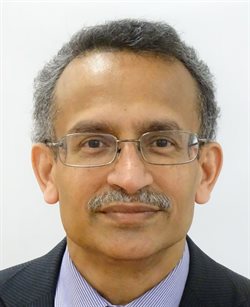
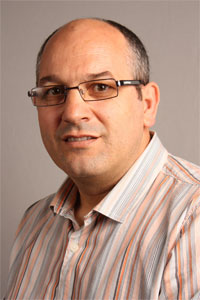
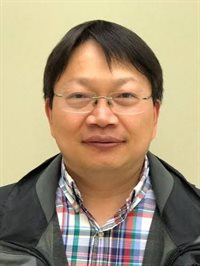
From left: Professors Subhes Bhattacharyya, Francisco Chiclana and Shengxiang Yang
Among those recognised is Professor Shengxiang Yang, whose research in computational intelligence and artificial intelligence has achieved international recognition. His career-long citation impact places him within the top 1% of researchers in Artificial Intelligence and Image Processing worldwide.
Professor Subhes Bhattacharyya, who is Director of DMU’s Sustainable Futures Institute and interim Associate Dean of Research and Innovation in DMU’s Faculty of Technology Arts and Culture is also named.
His research focuses on sustainable energy systems, energy access and the transition to low-carbon economies, is ranked within approximately the top 0.14% of researchers in the energy discipline for career-long citation impact.
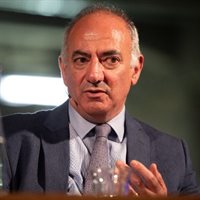
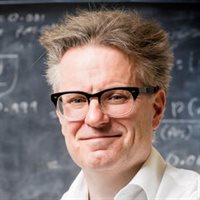
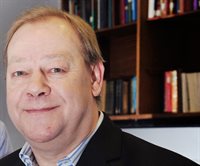
From left: Professors Panikos Panayi, Gabriel Egan and Martin Grootveld
Professors Francisco Chiclana and Yingjie Yang, Dr Mujeeb Ur Rehman and Professor Simon Coupland, whose work spans intelligent systems, computational modelling, decision-making and cyber security in the Digital Future Institute, are also named as standout researchers.
DMU’s contribution to health and life sciences is recognised through Professor Martin Grootveld, an expert in biomedical chemistry whose research explores how chemical changes in the body can help scientists better understand, detect and treat diseases and Professor Antony D'Emanuele, whose work includes pharmaceutical sciences and drug delivery.
In the humanities, Professor Panikos Panayi, Director of the Institute for Global Challenges, is recognised for his work in history and Professor Gabriel Egan for his research in literary studies, particularly Shakespeare and early modern literature.
The Stanford–Elsevier database provides both career-long and single-year measures of citation impact, offering a perspective on the influence of academic research internationally.
The latest recognition celebrates the contribution of DMU researchers to advancing knowledge, shaping their disciplines and addressing challenges through research and innovation.
Professor Mike Kagioglou, Deputy Vice Chancellor Planning, Research and Innovation, said: “This is a wonderful achievement for our researchers and something we can all be incredibly proud of.
“What is particularly pleasing is the breadth of expertise represented, from artificial intelligence and sustainable energy to healthcare, history and literature. It reflects the strength and diversity of research taking place across DMU and the contribution our academics are making to their fields internationally.
“Our ambition is to build on these strengths, bringing researchers together across disciplines and working with partners to tackle challenges that matter to society.
“I'm delighted to see our colleagues receiving this international recognition, which is thoroughly deserved.”
The full Stanford–Elsevier database is publicly available through Elsevier's research data repository.
The rankings also included academic colleagues who have Emeritus status at DMU who are among the world's top 2% most highly cited researchers. Professor David Rae is recognised for his research in entrepreneurship and business management, Professor Elizabeth Lambourn for her work on the history and material cultures of the medieval Indian Ocean, and Professors Tony Collins and Richard Holt for their contributions to sports history.
Posted on Monday 26 October 2026