A major new exhibition of the influential avant-garde Fluxus artists collective opens to the public on Friday, February 6th, at Leicester Gallery on campus at De Montfort University, Leicester (DMU).
Titled residue…what remains, the exhibition offers not only displays of visual artwork in the gallery, but also a programme of live performances including, at 4.30pm on the opening day, a radical new version of American composer Philip Corner’s controversial work Piano Activity - a sound composition in which a group of artists use saws, hammers, chisels, pliers and rasps to destroy a piano.
The piece caused outrage when performed at the first ever Fluxus show in Germany in 1962.
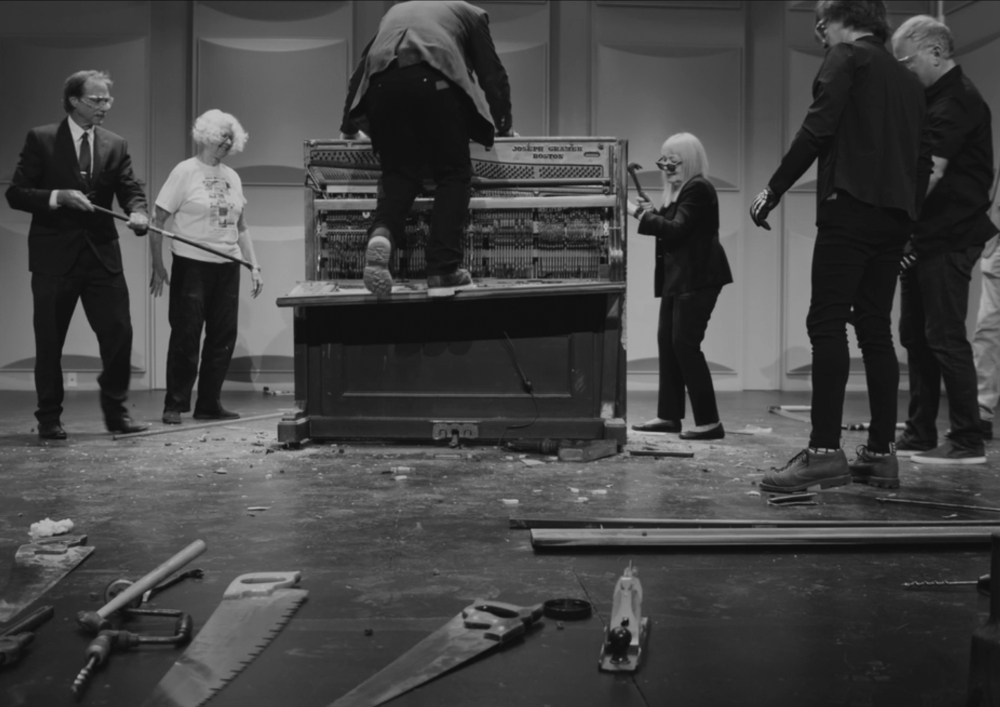
Image above: a performace of Philip Corner's Piano Activity. A new performance will be given at DMU on Februarry 6th as part of residue...what remains.
Curated by renowned choreographer Sue Schroeder, artistic director of Core Dance in Atlanta, USA, residue...what remains, brings together works by more than seventy international artists including seminal figures such as John Cage, Alison Knowles, and Anna Halprin - whose experimental practices dismantled conventional boundaries between music, visual art, dance and language.
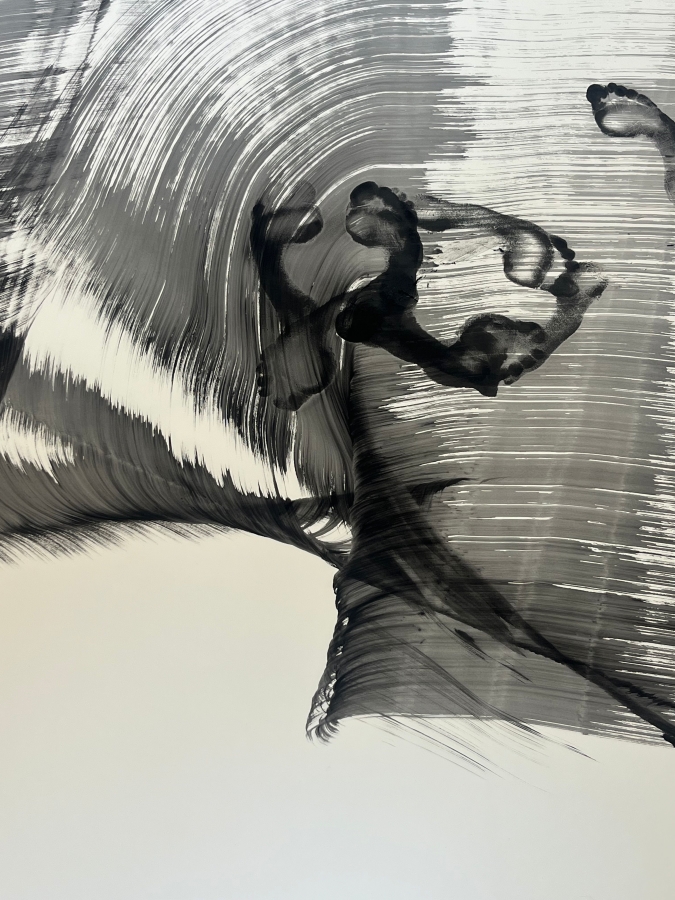
Image above: from a version of Steps, by John Cage which will be performed on February 7 at DMU.
Other artists in the exhibition include Yoko Ono, David Byrne, Robert Rauschenberg, Eric Andersen, William Burroughs, Molly Davies, Allen Ginsberg, Connie Hwang, Charlotte Moorman and Kurt Schwitters.
The exhibition draws on key collections from across Europe and the United States, as well as DMU’s own, and somewhat surprising, close connection to Fluxus through the use of many works in the Zurbrugg Collection - bequeathed to the university by the late Professor Nicholas Zurbrugg, whose collecting and work established DMU as a significant centre for Fluxus research.
Together, the sources provide a rich overview of the legacies of Fluxus artists and the group’s ongoing influence on contemporary visual arts, dance, theatre, film, music and performance. Their work has profoundly influenced art production since the 1960s and did much to normalise the idea - born of Dada and the Conceptual Art movement - that almost anything can be considered as art.
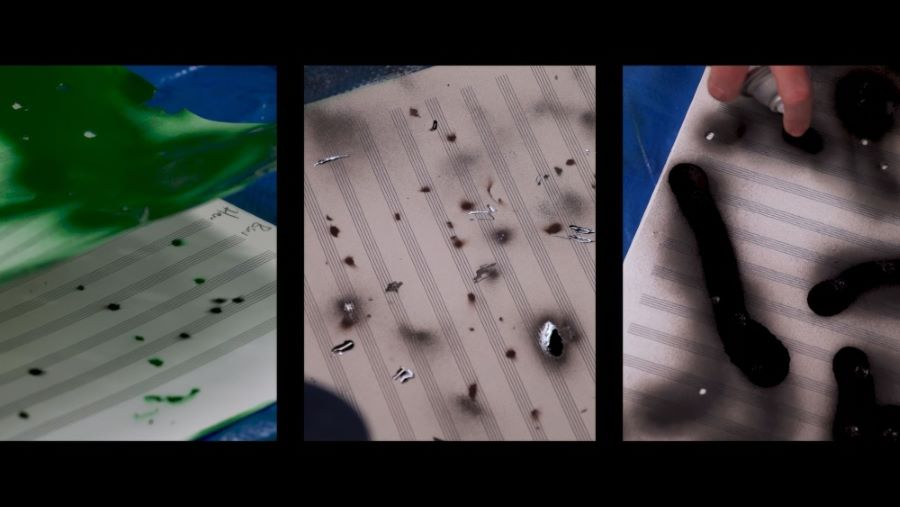
Image above: Sequence from the film by Adam Larsen that accompanies 1000 Symphonies (by Dick Higgins).
Curator, Sue Schroeder, herself a former student of Anna Halprin, has created a rich and ever-changing exhibition of visual work and live performance.
She said: “As curator, my experience and practice as a choreographer have shaped the exhibition, with action, dynamics and the passage of time carrying resonance within the space the exhibition inhabits.
"From my embrace of John Cage’s indeterminacy, randomness and chance operations to Anna Halprin’s participatory dance rituals of healing and transformation, my curatorial process mirrors my personal practice as an artist.
"Building on Nicholas Zurbrugg’s extraordinary legacy and influenced by the playful interdisciplinarity of Fluxus, I chose to create an ever-changing exhibition - a changing constellation of artists and artworks – alongside a rich performance program, Propositions. My intent is to provide a gathering point to interact through art, ideas, and discourse. With the public as witness and, at times, participant, my hope is to inspire and support personal and artistic agency, sorely needed in our times.”
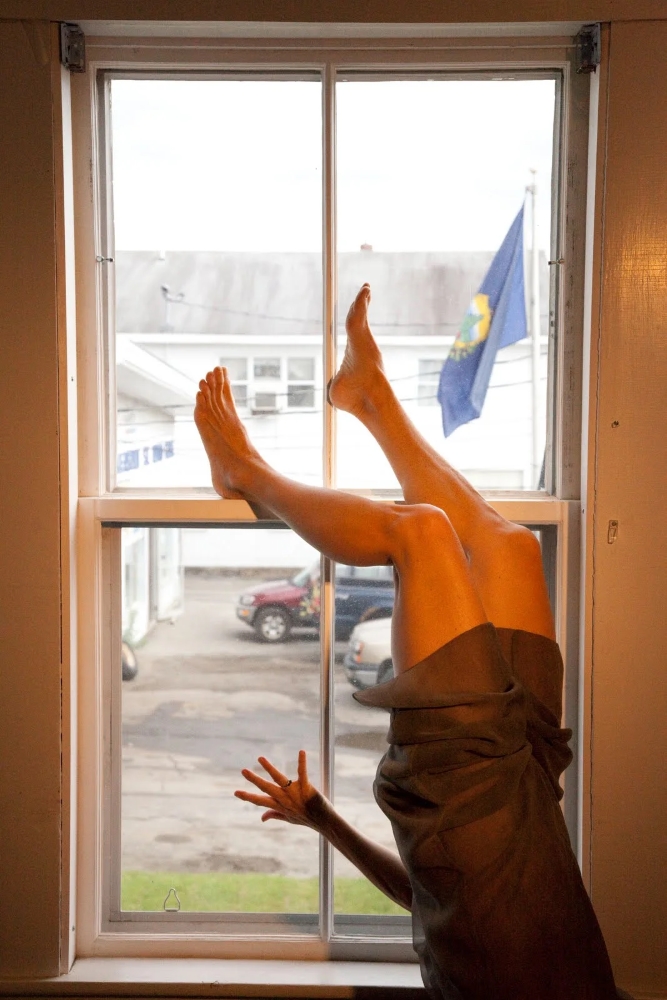
Image above: Critical State Leg Window by Polly Motley
residue...what remains is at DMU’s Leicester Gallery, Vijay Patel Building, Mill Lane, Leicester LE2 7BJ. Admission to the exhibition and all associated events and activities is free. It runs from Friday, February 6th, until Sunday June 7th.
For the full and varied schedule of events, visit residue...what remains - Leicester Gallery at DMU.
Developed by DMU's Leicester Gallery and Core Dance, the exhibition has been made possible through a major loan from lead partner, Fondazione Bonotto in Italy, as well as by further support from: Yoko Ono Studio, John Cage Trust, Alison Knowles Studio, Black Mountain College Museum & Arts Centre, Fabric Workshop & Museum, GraphicStudio, Tamalpa Institute Centre for the Halprin Work, Halprin Legacy Lab, Jade Dillinger, The John Erickson Art Museum and Unnoticed Art.
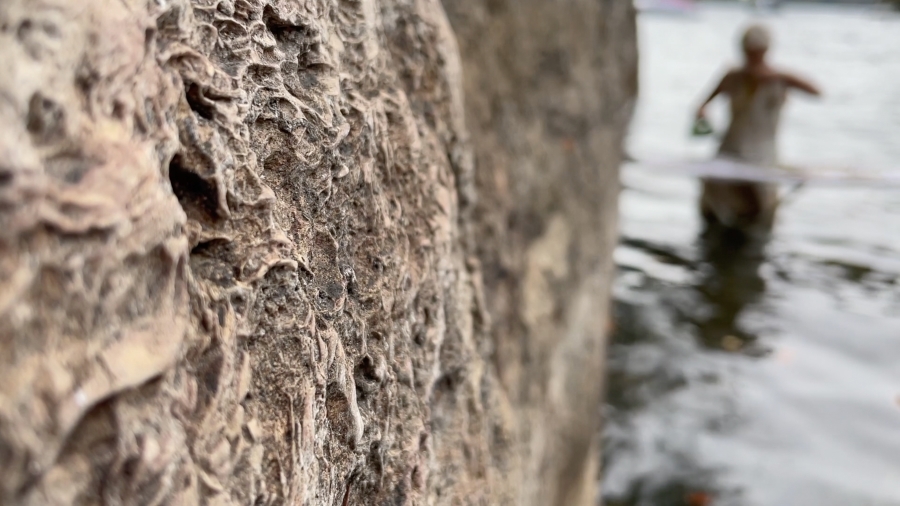
Image above: Ironing still 3 by Erika Senft Miller performer/Kelly Holt filmmaker.
About Fluxus
Fluxus - the word is Latin for flowing - was founded in 1960 by artist George Maciunas. Rooted in experimental music, particularly that of John Cage, it is characterised by a shared attitude rather than one particular style.
Proponents worked between different media – intermedia – blending music, literature, visual art and performance. Collaborations between Fluxus artists and across artforms were common. The collective valued simplicity and anti-commercialism. Humour, audience participation, and chance and accident often play a big part in creative processes of Fluxus artists.
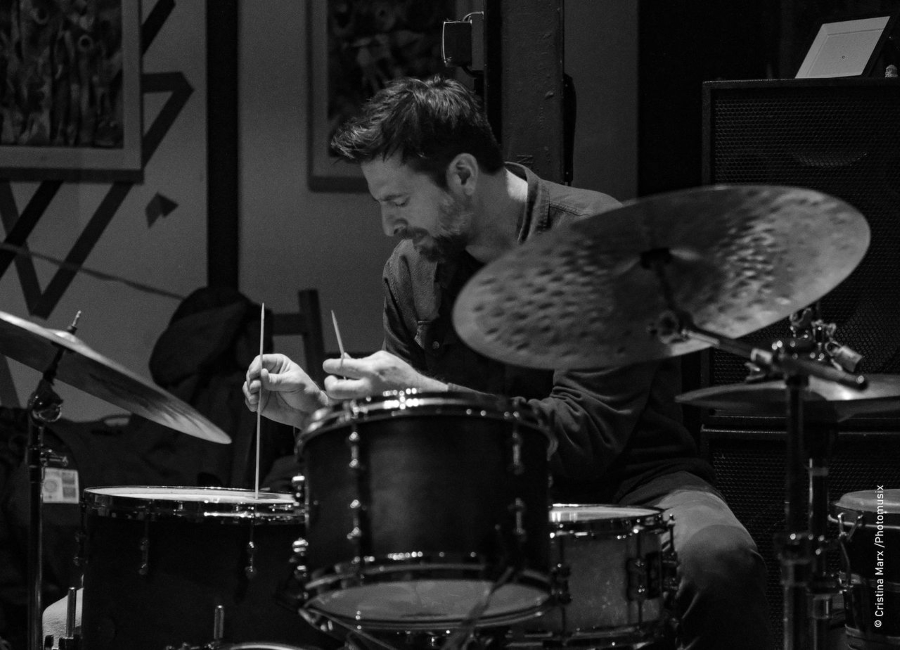
Image above: percissionist and experimental musician Jeff Arnal, photo by Cristina Marx at Photomuix.
Posted on Thursday 29 January 2026