April 22nd is National Stephen Lawrence Day - a time to remember Stephen’s life and reflect on his legacy. Here, Sherilyn Pereira, Deputy Director of the Stephen Lawrence Research Centre at De Montfort University Leicester (DMU), remembers Stephen and discusses the ongoing purpose and relevance of the national day that bears his name.
National Stephen Lawrence Day is a time of commemoration.
We remember Stephen Lawrence’s life – and tragic murder - and his family’s courageous, unrelenting fight for justice, despite the best efforts of the racist institutions they came up against.
It is also a time to focus on how we challenge injustice, recognise and celebrate progress and empower the next generation to create a better future.
This is Stephen’s legacy.
But as the far right rises – again – and racist rhetoric weaves its way back into everyday language, it can be hard to imagine what progress there is that is worth celebrating.
On this Stephen Lawrence Day, I want to share with you a message of hope.
We witnessed it most recently at a major event organised by the Stephen Lawrence Research Centre (SLRC), and it came from the group that Stephen’s mother, Baroness Doreen Lawrence, has always said will be the ones to bring about the changes we need in society - our children.

But first some background to how we got to this point.
The SLRC was officially opened at DMU by Baroness Lawrence, in 2019. She was Chancellor of the university at the time.
The centre has an exhibition space containing artefacts drawn from an archive entrusted to the university by Baroness Lawrence.
Visitors – and there have been thousands in the last six years – are able to view schoolbooks, family photos, drawings and certificates which offer a snapshot into the life of Stephen, painting a picture of a creative young man who was athletic, popular and dreamed of being an architect.
The exhibition also displays a timeline of events, from Stephen’s racist murder to the jailing of two of his killers 18 years later.
There are also accounts of landmark moments in modern history that happened because of Stephen and his family, such as the publication of the Macpherson Report – which labelled the Met Police as institutionally racist - and the change to double jeopardy laws that led to the eventual conviction of Gary Dobson and David Norris for Stephen’s murder.
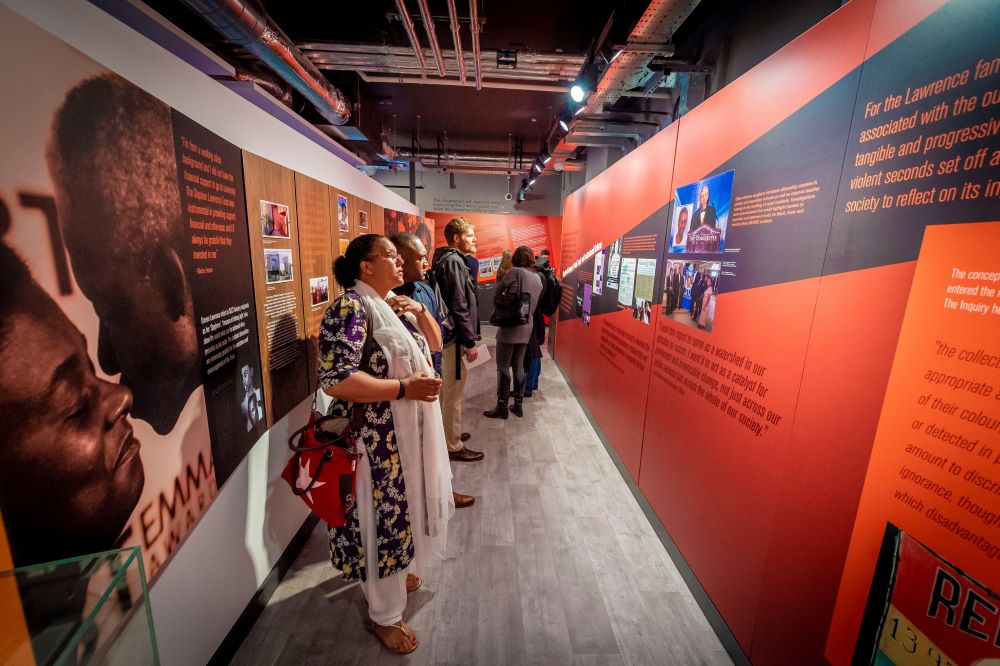
The centre is also a home for our researchers to explore race and racism, asking difficult questions, debating critical issues and developing new ways of thinking about how we create a more equitable society.
Running alongside this has been a continuous programme of work with our communities – university students, academics, social groups, clubs, businesses, you name it!
But there is one area where demand to learn more about Stephen and his legacy outstrips all others, and that is the primary and secondary schools of Leicester and Leicestershire.
This engagement work in city and county schools started not long after the SLRC opened.
The Winstanley School - situated on the city and county boundary - reached out to ask how we could help address problems with racism being reported by their children.
Through conversations with an inspirational headteacher and one of his outstanding members of staff, and support from their Life Multi-Academy Trust, it became clear that the SLRC needed to develop a racial literacy and anti-racist educator plan to empower teachers to embed social justice and anti-racist practices in schools.
The demand for our Teaching to Transform programme has grown every year since. In fact, in the last six years, we have worked with more than 100 schools and 2,000-plus educators.
At the same time the SLRC created the Stephen Lawrence Ambassadors programme. Pupils actively engage in learning about social justice and issues of racism, while sharing what they learn with their peers and being empowered to meet with teachers to share their concerns, all in Stephen’s name.
The first 10 Stephen Lawrence Ambassadors were appointed at The Winstanley School in 2020. We now have more than 300 across Leicester and Leicestershire schools.
Each year, the SLRC holds a Stephen Lawrence Ambassador Symposium, when we invite the ambassadors to come together on the De Montfort University campus to attend workshops, share ideas and celebrate their achievements.
The symposiums are a real highlight of ours, the children’s, and the teacher’s year.
But I think it is safe to say that the latest symposium outdid all the symposiums that have come before.
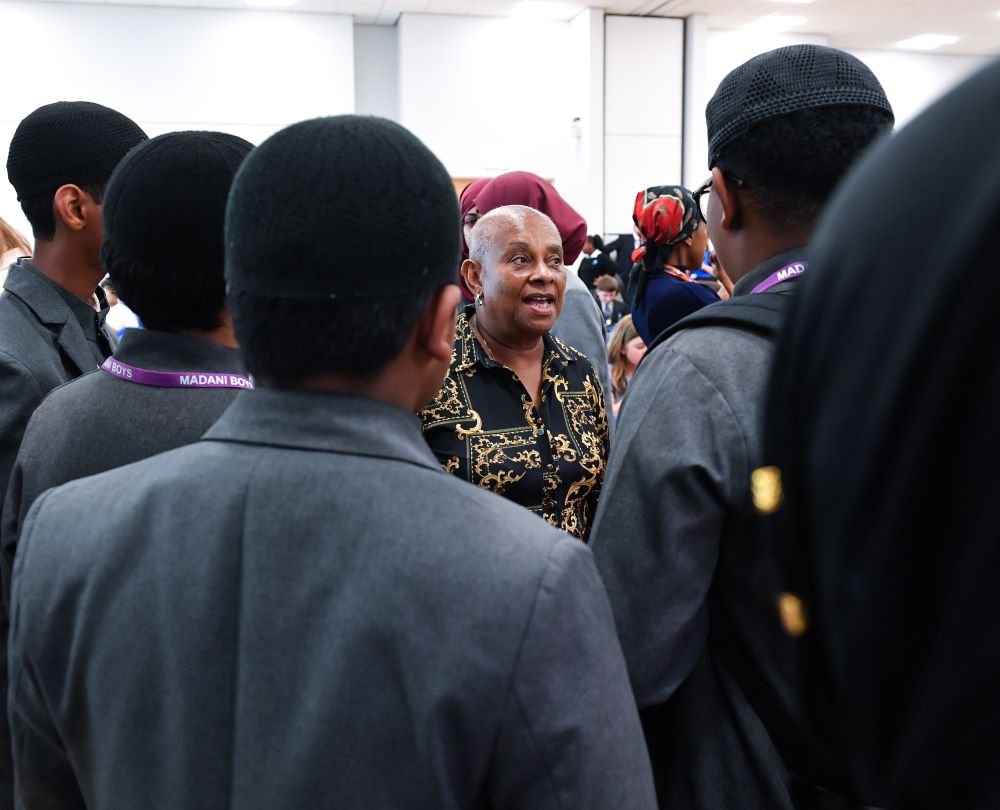
Without the pupils knowing, we had invited Baroness Lawrence to come along to meet them.
So, at the beginning of the symposium’s afternoon session, we assembled everyone together in a very large room and told them we had a surprise.
Then Baroness Lawrence walked in.
At that moment every single one of the ambassadors – aged from six to 16 - took to their feet, broke out into applause and whooped and cheered.
Some broke ranks and ran up to Baroness Lawrence saying what an honour it was to meet her, telling her how they knew all about Stephen’s story and how proud they were to meet her.
We particularly remember two schoolgirls who insisted on holding Baroness Lawrence’s hand for virtually the whole time she was there, proudly stating, “We are looking after Baroness Lawrence”.
It is worth spelling out why this moment meant so much.
Stephen Lawrence was murdered 33 years ago this year.
Not only were the pupils at the symposium not born at that time, but some of their mums and dads were not around then either.
And yet here we were seeing Baroness Lawrence surrounded by young people, who all knew Stephen’s story, and who were treating his mum like a pop star.
The happiness of the children and the joy on Baroness Lawrence’s face is something we will never forget.
That, right there, was Stephen’s legacy in action.
So, when you have those despairing moments that you ask yourself ‘what is happening in this world?’ and ‘what hope do we have?’, remember this story for National Stephen Lawrence Day.
We do have hope. We do have a future. And if you want to know what it looks like, ask your children.
- Sherilyn Pereira is the Deputy Director of the Stephen Lawrence Research Centre at DMU. Sherilyn and the SLRC team would be delighted to hear from you. If you want to organise a visit to the centre or find out more about how the Teaching to Transform programme can help your schools, email slrc@dmu.ac.uk
Posted on Wednesday 22 April 2026