Robert Murnane has joined Fluid Science as a Knowledge Transfer Associate as part of a three-year collaboration with De Montfort University (DMU). The innovative Knowledge Transfer Partnership (KTP) brings together DMU and Fluid Science, an advanced chemical solutions company based in Liverpool, to develop greener and more cost-effective anti-cancer compounds.
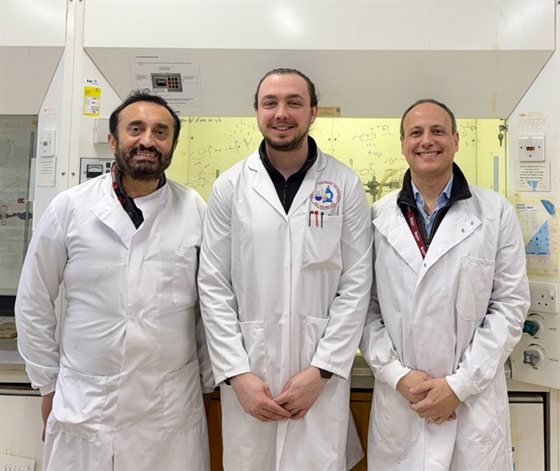
As Process Development Scientist KTP Associate, Robert will help turn academic research into practical, industry-ready solutions by creating sustainable, scalable manufacturing processes that meet pharmaceutical standards. His work will support skills development within the business and contribute to the development of a cancer detection product, helping to reduce environmental impact while improving access to life-saving treatments.
In his own words, Robert shares insights into his background, experience and the value he aims to deliver through this collaborative project.
Can you tell us about your background and what led you to become a KTP Associate on this project?
I am a former DMU student, having completed a BSc (Hons) in Forensic Science before progressing to a PhD in Medicinal Chemistry at DMU. My doctoral research focused on anti-tuberculosis and anti-cancer drug development.
During my PhD, my supervisor, Dr Federico Brucoli, made me aware of the opportunity to become a KTP Associate at Fluid Science. This role offered the ideal opportunity to continue academic research while working directly within a business, applying my expertise to a project with real impact.
How would you describe your role in the partnership, and the impact it aims to achieve?
I act as a bridge between the university and Fluid Science, translating the research led by Dr Ruparelia and Dr Brucoli into practical applications within the business. My role supports the development of Fluid Science’s research and development capabilities, enabling their work to be shared and scaled to reach a wider audience who can benefit from the research.
Why is developing greener, more affordable anti-cancer compounds such an important area to work in?
Developing greener and more affordable anti-cancer compounds is so important because cancer affects millions of people globally each year, and access to effective treatment remains a major challenge for many. Advancing this research has the potential to make life-saving therapies more accessible to those who need them most.
At the same time, the principles of green chemistry are becoming increasingly important. While scientific research plays a vital role in improving health outcomes, it can also place significant demands on the environment. By developing more sustainable and environmentally responsible methods, we can reduce the impact on the planet while still delivering high-quality research and meaningful medical advances.
What skills or experience are you most looking forward to developing during the KTP?
I am particularly excited to further develop the research skills I built during my PhD at DMU. I am also looking forward to attending conferences, meeting new people, and engaging with the medicinal chemistry community to exchange ideas. Experiencing this work through a business lens will be invaluable, and I am especially keen to gain hands-on experience in fitting out and working within a new laboratory at Fluid Science.
What would you say to businesses or graduates considering getting involved in a Knowledge Transfer Partnership?
This is a fantastic opportunity for graduates to continue working in research while gaining first hand experience of how innovation works in industry. It also allows businesses to tap into the expertise coming out of universities and apply it directly to real commercial challenges. My goal is to optimise the work developed at De Montfort University by Dr Brucoli and Ruparelia and scale it so that it can be used more widely within Fluid Science.
For businesses, a Knowledge Transfer Partnership provides a structured way to collaborate with university experts while bringing a highly qualified graduate into your organisation to lead an innovation project. Partnerships typically run for two to three years and are supported by grant funding from Innovate UK.
If your organisation is interested in taking on a recent graduate to drive innovation and growth through a Knowledge Transfer Partnership, you can find out more by contacting the DMU Research, Business and Innovation team on businessservices@dmu.ac.uk to explore how a KTP could support your organisation’s ambitions.
Posted on Thursday 26 March 2026