A De Montfort University Leicester (DMU) academic has joined senior figures from government, industry and academia to help shape national policy aimed at improving opportunities for women in the UK technology sector.
Dr Ismini Vasileiou attended the third in-person meeting of the UK Government's Women in Tech Taskforce, where two significant reports were published examining the barriers facing women in technology careers and the economic benefits of greater inclusion.

The publications include an independent study by Alma Economics, commissioned by the UK Government, alongside findings from the Taskforce's Building a Future Tech Sector that Works for Everyone Call for Evidence.
The reports found that tacklingthe underrepresentation of women in the digital economy could add around £4 billion to the UK's GDP each year while increasing average earnings for women working in digital roles. They also identify challenges including workplace culture, career progression, maternity return, and the growing influence of artificial intelligence on recruitment and career development.
Evidence gathered from more than 570 respondents found that 73% believe emerging technologies such as AI are changing who applies for and succeeds in technology roles, while 74% said improving organisational culture would help more women enter, progress within and lead the sector.
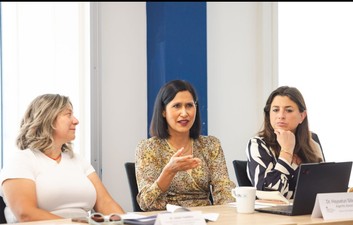
Dr Vasileiou, who is also founder of the East Midlands Cyber Security Cluster, brings expertise in cyber security, digital resilience and workforce development to the national Taskforce.
She said: "The findings underline what many of us working across cyber, skills and regional innovation already see in practice: that talent is not the problem.
"The challenge is whether the sector has the right cultures, pathways and structures to enable women to enter, progress and lead in tech.
"For me, this is an economic and resilience issue as well as an equality issue. If we want a stronger digital economy, a more secure cyber workforce and better innovation across the UK, we can't afford to exclude or lose talent because workplaces, recruitment models or progression routes have not kept pace.
"Through the East Midlands Cyber Security Cluster, we see the importance of translating national policy into practical regional delivery.
"That means working with employers, universities, founders, professional bodies and government to create inclusive routes into cyber and tech, support organisational change, and ensure that women are not just encouraged into the sector but are able to thrive and lead within it."
Dr Vasileiou's involvement in the taskforce reflects DMU's contribution to national discussions on cyber security, digital skills and workforce development, ensuring that expertise from Leicester is helping to shape future government policy.
The work also aligns with the university's wider research into cyber resilience, digital innovation and the future workforce, bringing together researchers, industry and policymakers to address some of the UK's most significant technological and societal challenges.
The Women in Tech Taskforce is now moving into the next phase of its work, developing recommendations into practical programmes aimed at increasing participation, improving workplace cultures and strengthening the UK's digital economy.
Posted on Monday 6 July 2026