The signature of Leicester’s past can still be found in the soil of its parks and open spaces, and even in the fungi growing there, according to scientists at De Montfort University Leicester (DMU).
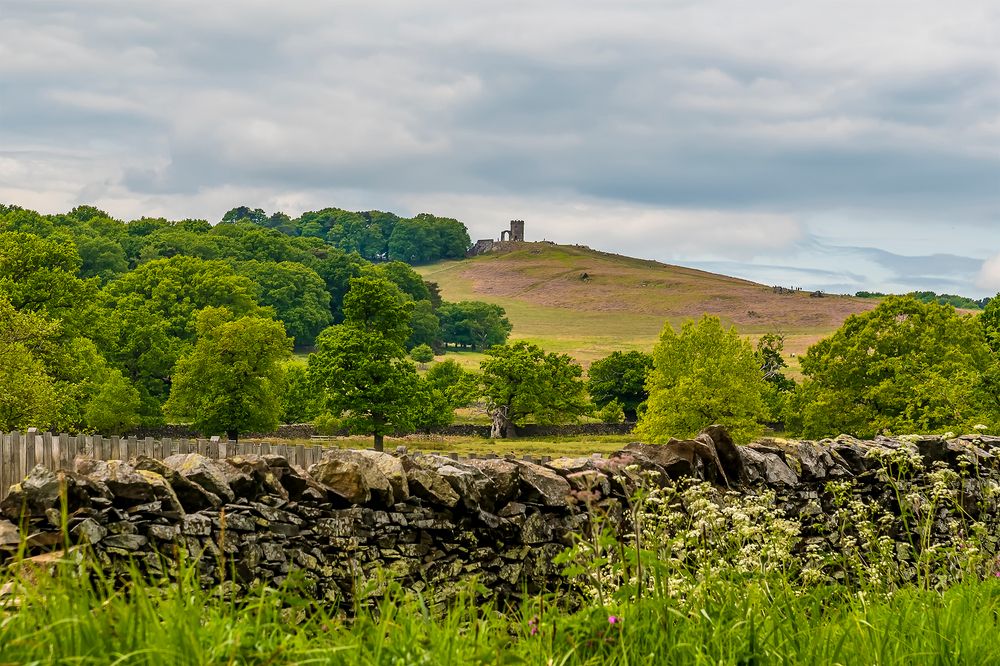
Researchers from DMU collected 850 individual soil samples from 18 parks and open spaces in Leicester and eight rural locations around the county.
Dr Antonio Peña-Fernández, who conceived the study, explained that the samples were then analysed using inductively coupled plasma mass spectrometry (ICP-MS), a highly sensitive technique which allows scientists to detect minute traces of individual metals by using hot plasma to turn elements into charged particles. Much of the analysis was carried out by Gurminder Jagdev as part of his PhD research at DMU.
Dr Peña-Fernández, Dr Gurminder Jagdev, Dr Mark Evans, who was a second supervisor on the PhD, and others recently published two peer-reviewed papers revealing how Leicester’s long history of manufacturing, development and road traffic has left a subtle chemical fingerprint in the ground – and even in wild mushrooms growing there.
They found that urban Leicester soils contained higher levels of chromium, copper and zinc than their rural counterparts, a pattern the researchers say is consistent with the accumulated effects of urban life, including historical industry, traffic and changing land use.
Rural soils, by comparison, contained higher levels of arsenic and vanadium, whose distribution was more strongly associated with natural geology and the mineral make-up of the ground.
In broad terms, the soil of the city carries a stronger signature of what has happened above ground, while the chemistry of the countryside is more strongly influenced by what lies beneath.
In a related study, the team compared levels of cadmium, copper and zinc in the soil with those found in 157 wild mushrooms, representing 17 different species or groups, collected from green spaces across Leicester and at Bradgate Park.
The results showed that mushrooms can provide another way of reading the environment because different species absorb and accumulate metals in different ways.
Leicester and Leicestershire provide a particularly interesting laboratory because of their industrial history. The researchers point to the area's long association with manufacturing, textiles, footwear production, engineering and metalworking, alongside activities including coal mining, quarrying and brick-making.
Fine particles produced by industry and coal burning can travel through the atmosphere before settling onto the ground, while road traffic provides continuing inputs through brake and tyre wear and road dust. Rainwater and surface runoff can move material further, while generations of building, demolition and landscaping can redistribute soil and rubble around a city.
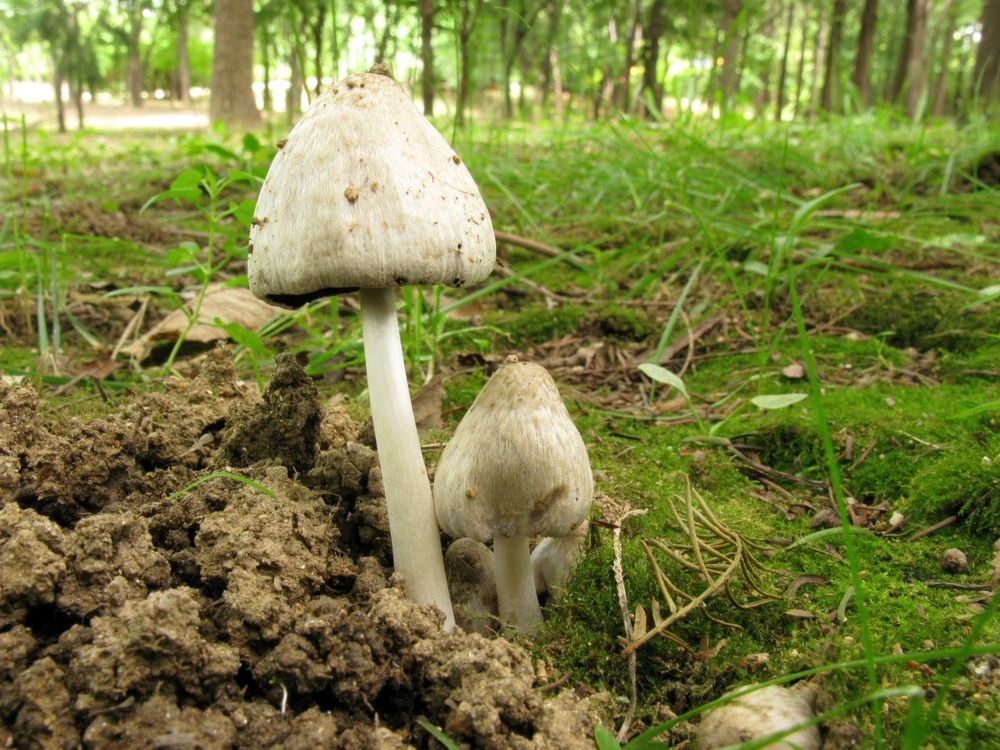 Common inkcaps (Coprinopsis atramentaria)
Unlike many substances, metals do not simply break down and disappear. They can remain bound within soil for decades, leaving researchers with a chemical record of generations of human activity.
Dr Antonio Peña-Fernández said: “The important thing to stress is that this research is not about saying Leicester’s parks are safe or unsafe, or identifying dangerous levels of contamination. The concentrations we have found do not suggest that people using these green spaces are at risk.
“What is fascinating is what the chemistry can tell us about the history of the environment. Soil can retain a signature of industry, traffic and development over a very long period, so by analysing it we can begin to read something of the story of how a city has changed.”
The research included some of Leicester and Leicestershire’s best-known green spaces, including Abbey Park, Braunstone Park, Jesse Jackson Park and Victoria Park, with Bradgate Park providing a rural public-park comparison.
One particularly revealing comparison involved mower’s mushrooms (Panaeolus foenisecii) collected from Abbey Park and Braunstone Park.
The Braunstone Park mushrooms showed higher median levels of copper and zinc than those collected at Abbey Park. Researchers also found differences in the surrounding soil, including its acidity, moisture and organic matter, which can affect how easily metals become available to fungi.
The scientists caution that only five Braunstone samples were available for that direct comparison, meaning the result illustrates how conditions can vary between locations rather than showing that one park is more contaminated than another.
At Jesse Jackson Park, researchers examined fairy ring champignons (Marasmius oreades), which showed particularly low levels of cadmium compared with several of the other mushroom groups studied.
At Victoria Park, yellow-edged bonnets (Mycena citrinomarginata) had the highest median zinc concentration among the main mushroom groups studied, while common inkcaps (Coprinopsis atramentaria) collected from Bradgate Park contained comparatively low levels of cadmium.
Those differences show that mushrooms do not simply reproduce the chemical composition of the soil beneath them.
Different species take up elements in different ways, while soil acidity, moisture, organic matter and other local conditions can affect what eventually reaches the mushroom.
Researchers say this means wild mushrooms could potentially provide useful biological monitors, adding another layer of information to conventional soil testing.
The project has been years in the making. DMU first reported on Gurminderjeet Jagdev’s research in 2019, when he was beginning his PhD investigation into metals in urban and rural soils across Leicestershire.
Taken together, the new studies provide a chemical snapshot of Leicester and Leicestershire which combines the area's natural geology with traces left by generations of human activity.
Posted on Wednesday 7 October 2026