The former British Ambassador to Brazil has told students at De Montfort University Leicester (DMU) that exiting the EU would leave the UK weaker.
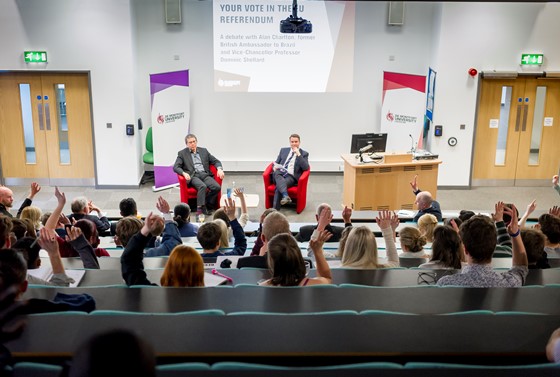
Alan Charlton, who enjoyed a distinguished career in the Foreign Office, said, during a talk at DMU's Hugh Aston building, that the effects of the UK voting to leave Europe would lead to 'problems and uncertainty' on a wide range of issues.
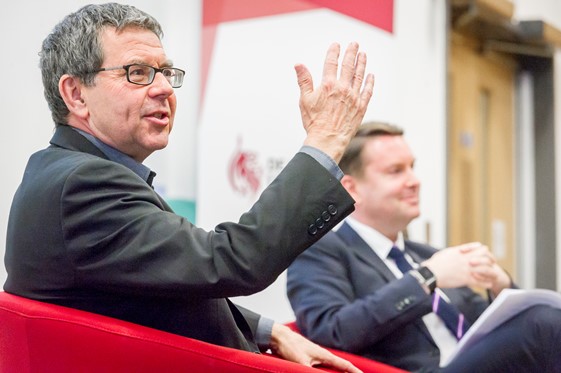
In answer to a series of questions put to him by Professor Dominic Shellard, Vice-Chancellor of DMU, in front of a packed lecture theatre, Mr Charlton outlined why he felt young people should back the Britain Stronger in Europe campaign.
He said: "We are not sure how this will affect things for international students, with passport movements and those on the Erasmus project. There is so much which is uncertain but it is young people who will most feel the effects of this referendum.
"But I am concerned that many voters will wait until the final few weeks to make up their mind, and allow current affairs to sway their minds. For example, people might want to block David Cameron right now because of how he has been caught up in the Panama papers scandal. But this is nothing to do with the EU question.
"This isn't like a general election where in four years' time we can change our mind. This is for keeps."
RELATED NEWS
Education Secretary visits DMU with the Britain Stronger in Europe campaign
Report spells out benefits of EU students to Leicester's economy
Students develop 100 policy ideas for Europe in new DMU project
Mr Charlton, who was until 2013 the British Ambassador to Brazil, told the audience that while he did not think a Brexit would mean a 'dramatic collapse of national security', maintained the country was far better staying in the EU.
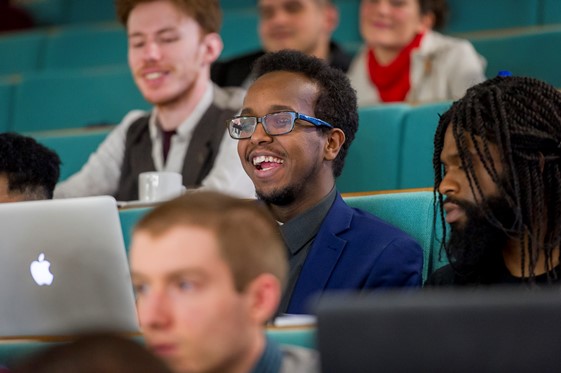
He said: "We cannot be stronger outside the EU in terms of our international power. A lot of countries will actually regard us as weaker if we leave.
"European countries tend to have to follow EU rules even if they are not part of the Union - I take Norway as an example, which is largely following EU policy but not getting any of the benefits, like the common market."
Taking questions from students in the audience, Mr Charlton countered the argument that by staying in the EU, Britain would be giving up its sovereignty by stating that it would be the same with membership of organisations like NATO.
He said: "The world of the future is much more influenced by global organisations. To be part of this you have to share."
He also explained the importance of UK's membership of the EU in helping maintain a positive relationship between Britain and Ireland, and the uncertain impacts a Brexit would have on university research done in collaboration with European universities and funded by the EU.
International Relations MA student Mildred Hauck - who came from Germany to study at DMU - said she agreed with many of Mr Charlton's points.
She said: "In Germany I felt a real European identity, like I was a European citizen and it feels quite different here.
"Although the effects of the UK leaving the EU are uncertain, it would certainly have been much harder for me to come and study here if Britain was not part of the EU.
"But having said that I want to hear from the Leave campaign before I make a final decision and I find it much harder to hear what they have to say - it seems everyone is in favour of staying."
Posted on Wednesday 13 April 2016