A couple of weeks ago, some De Montfort University students and I attended a DMU global trip to explore politics and the United Nations Sustainable Development Goals in action in the city of Berlin.
We spent four amazing days full of activities, where we got to learn about the city, its history and the importance of the SDGs in communities.
Day one
On our first day, we met at Leicester’s train station and then travelled Cross Country to Stansted Airport. Despite a slight delay, we left the UK and safely landed in Berlin, Germany. We then headed to our accommodation, A&O Kolumbus Hostel in the eastern side of the city and checked in. After a short karaoke session at the bar of the hostel, we decided to try the infamous Doner kebab, probably the best one I ever had.
Day two
We spent the morning with Christine, founder of Serve The City Berlin, ‘a global movement of volunteers showing kindness in practical ways to people in need’.
After a short introduction of the movement and its work, we began our first volunteering activity, which involved gardening (removing weeds and plant new flowers) and building a bench for an elderly residential home in the heart of the city.
It was hard work, but it paid off! The outside of the building appeared way cleaner, the bench added colour, and the flowers and plants left the garden with a fresher look. I spent the rest of the day shopping, exploring the many vintage shops that the city offers and we then ended the day with a lovely group dinner in Tiergarten, followed by a short night tour of the area.
Day three
In the morning we had an insightful tour of the city led by Mark Charlton, organiser and director of the United Nations Academic Impact SDG 11 Hub at DMU. We got to know about Berlin’s history and the impact of World Wat II and the division in East and West Berlin.
We visited a variety of important landmarks stretched within the reunited city: starting from Alexanderplatz, with its World Clock and the ‘Plattenbau’ houses, the TV tower, the Berlin Dome, a series of embassies, the Brandeburg Gate and the Holocaust Memorial.
Interesting facts are the differences in the architecture in old Ost- and West-Berlin and the story behind the Ampelmann. We ended up in in Potsdamer Platz and saw the remaining of the Berlin Wall.
Mark also highlighted the importance of development in sustainability and the UN SDGs, especially relevant SDG 11 (Sustainable Cities and Communities) and SDG 16 (Peace, Justice and Strong Institutions):
“Berlin sets as an example. It went from being a midpoint of horror (in regards of the tyrannies of the two world wars and the Cold War) to a peaceful, economically sound and sustainable city, as it overcame and is working towards tackling global challenges that the community faces, including climate change, poverty, hunger and the maintaining global peace”.
After lunch, we travelled to Marienfelde, a locality in southwest Berlin, home to the Marienfelde Refugee Centre and its museum. Once a refugee centre for East Germans fleeing to the West, the centre still functions as a shelter for people escaping hardships in other countries.
Following a brief tour of the museum, we met Atefa, who talked about her moving and inspiring story. Her strength and resilience are truly admirable: despite having to leave her family and travel by herself all the way to Germany from Afghanistan, she pushed forward and never gave up, achieving most things she wanted and a better prospect for her and her family’s future.
Day four
We met with Carsten Otto, managing director of the foundation Berliner Sparkasse, by the HQ in Alexanderplatz, who talked to us about the importance of charities and foundations, networking and working together for the community, building on the Sustainable Development Goals.
We received a thorough explanation of the foundation’s work, the many achievements since its creation in 2010, and the thousands of opportunities that emerged from their efforts for Berliners.
We then headed to one of the accommodations for immigrants directed by Hero, which provides ‘social services focused on the reception and integration of refugees and asylum seekers in Germany and Scandinavian countries’.
We met Joana, which gave us a tour of the building, explained the aim of the foundation and their work with immigrants and refugees: the building we visited inhabited mostly families and children, so we were tasked with painting the walls facing the internal courtyard, where the kids pass most of their time playing. We may not be art students, but the children and their parents loved the final result.
Overall, it was an amazing experience. All the activities taught me something new - the importance of working with and for the community towards a better society, values like respect, inclusion and diversity, the rich history of the city of Berlin, the importance of sustainable goals and the power of resilience.
I am grateful I got to meet amazing people with whom I share the same ideas and goals for the future and that do a lot for others.
The city holds a special place in my heart, or as we say in Italy, ‘ci ho lasciato un pezzo di cuore’!
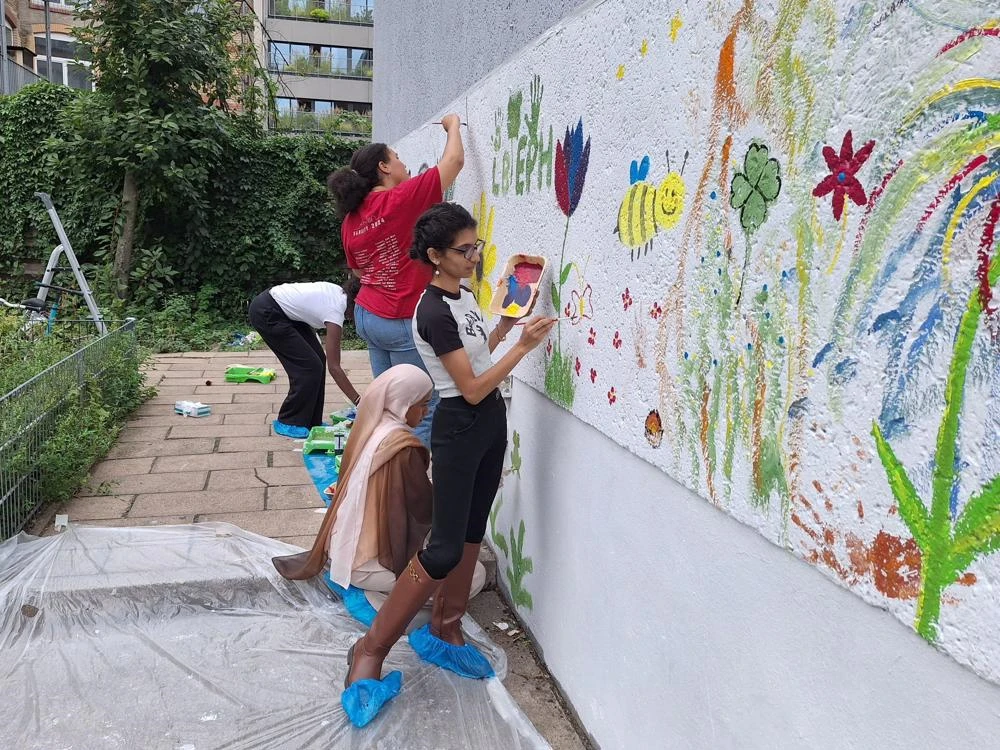 Students volunteering at a centre for asylum seekers and refugees in Berlin
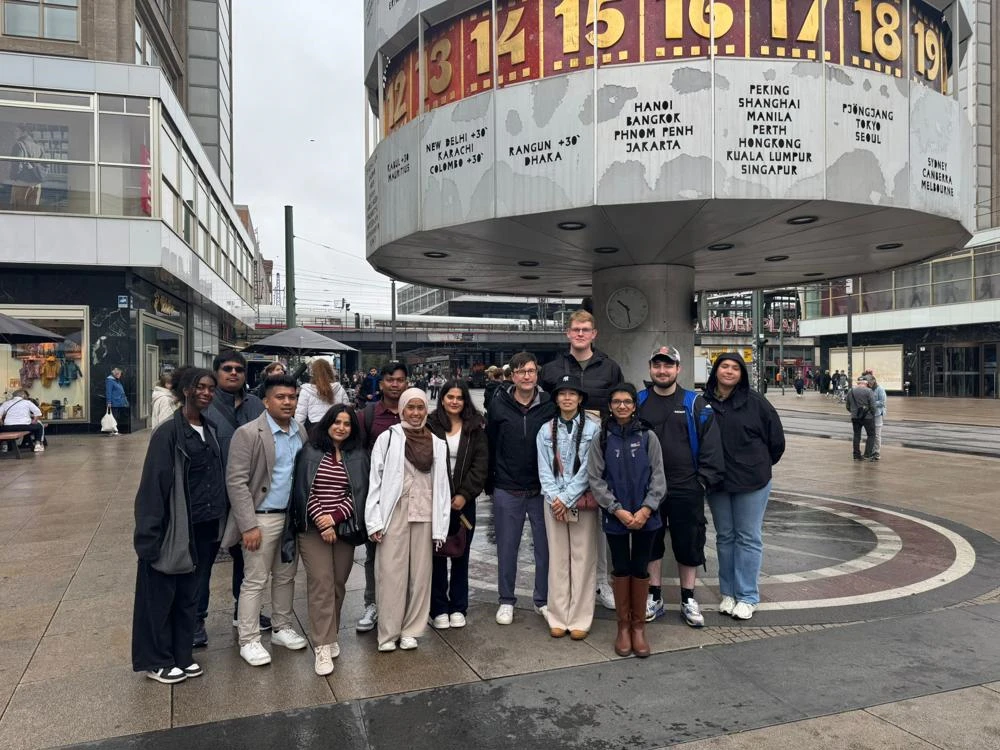 DMU Students with Carsten Otto by the World Clock in Berlin